


Ankle boots: how to choose
A practical guide to choosing ankle boots by heel, toe shape, upper and fit, with styling and care notes for the pieces in our selection.
At a glance
- Prices today
- $16.99 to $49.99
- Colours
- black, red, brown, grey, beige, blue, green, white, khaki, pink, rose, purple
- Materials
- rubber, denim, wool, suede, leather, cotton, knit, lace, pu leather, faux fur
- Finishes
- matte, glossy
- Details
- lined, zip, lace-up, non-slip, adjustable, slip-on
From the product pages of the pieces in stock now. Prices update with stock and are shown in your currency.
Shop ankle boots
All Shoes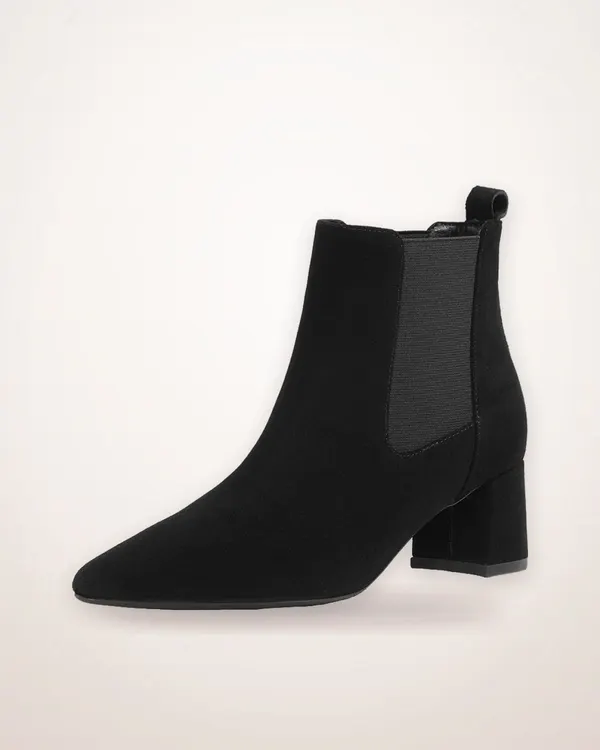
How to choose ankle boots
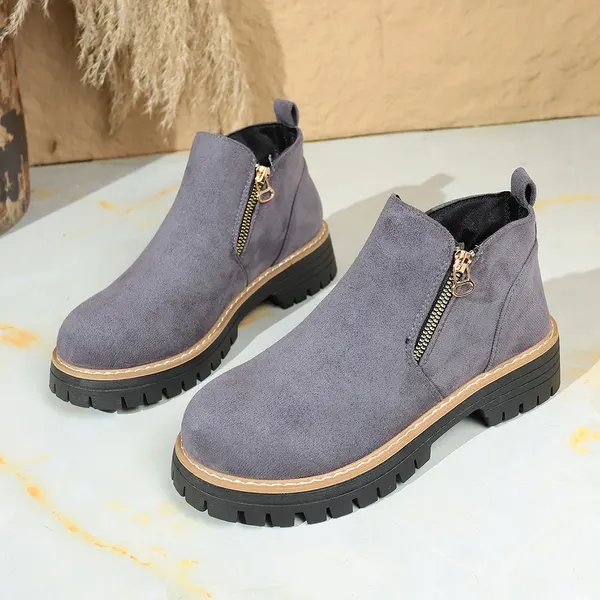
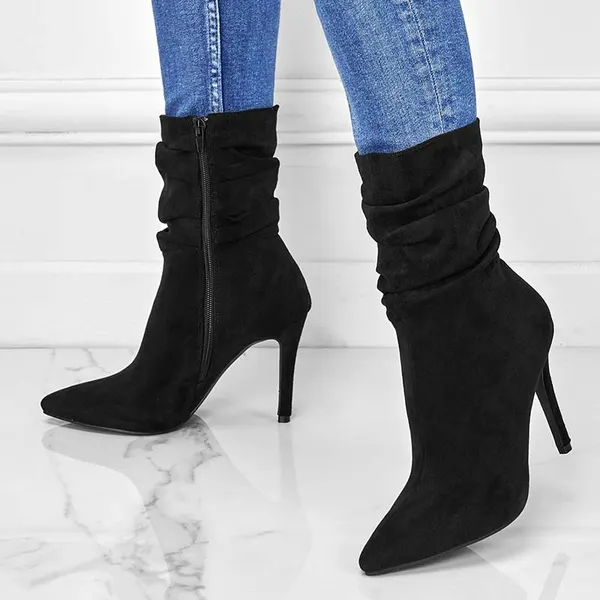
Start with the shape of your day. A low chunky heel of 3-5cm is the steadiest choice for commuting, errands and long stretches of standing, and it appears across several suede and leather styles here. A fine 6-8cm heel gives a more formal line for desk-to-dinner plans, while a stiletto above 8cm is best kept for occasions when you will not be walking far. If you want height without a delicate step, look at the chunky heel options rather than the fine heel or stiletto pairs.
The toe shape changes the proportion as much as the heel. A pointed toe draws a clean, longer line under straight trousers and midi skirts, and it gives a plain outfit a sharper finish. A round toe leaves more room across the front of the foot and reads softer, which suits denim, knitwear and relaxed tailoring. Check the product notes for each pair: pointed shapes should leave a little room to move at the toe, not press against it.
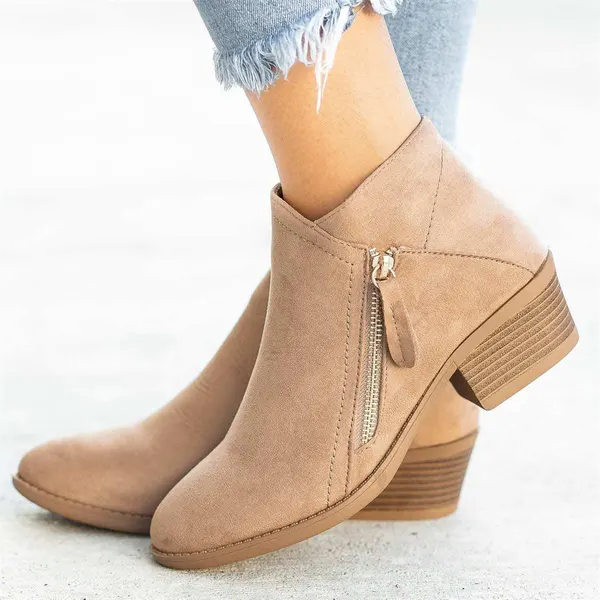
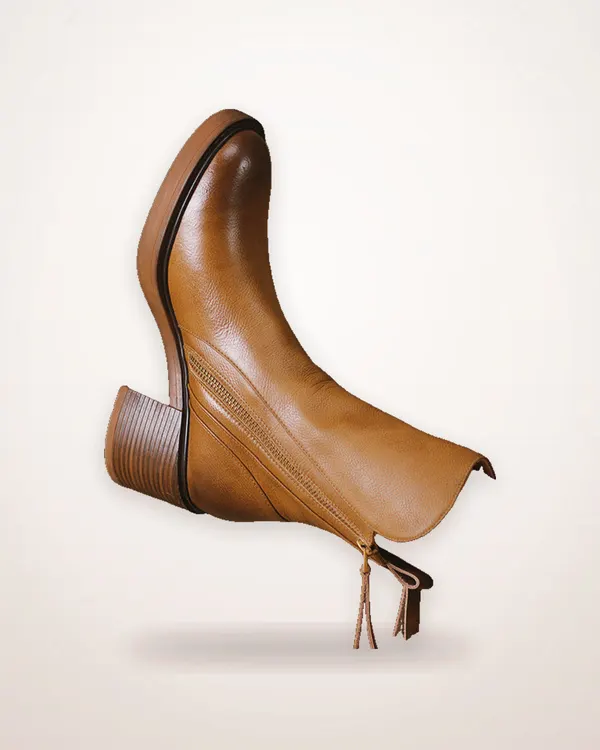
Think about how you get them on, too. A side zip opens the shaft cleanly and is useful over thick tights or straight-leg jeans; a Chelsea shape is a slip-on with a clean ankle line; a lace-up front lets you adjust the fit across the instep. The shaft should sit at the ankle, with the opening close to the leg rather than gaping. If you plan to wear thick socks, that is the moment to size up where the product notes advise it.
Materials, details and fit
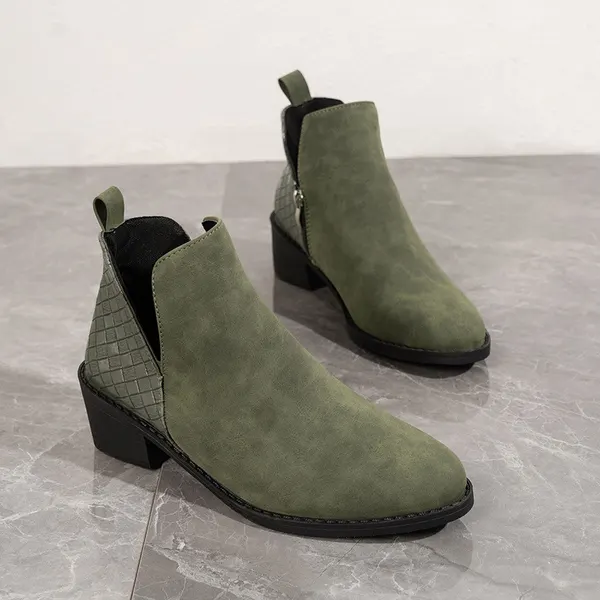
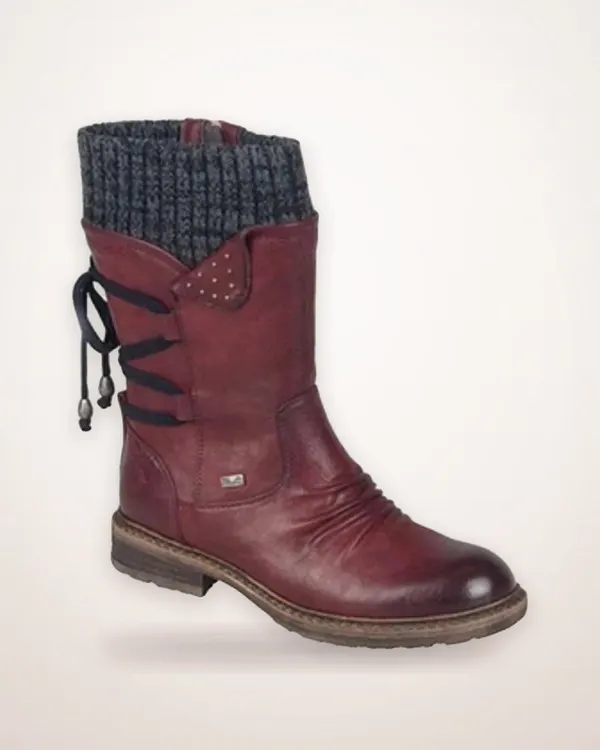
Upper materials set the character of the boot. Leather gives a smooth surface and a grounded look, while suede has a soft, brushed or velvety nap that pairs naturally with wool, denim and knitwear. Some styles use a smooth PU upper with a light sheen; others use cotton with a textile insole and a composite sole. None of these materials behaves in exactly the same way, so read the individual product notes rather than assuming every ankle boot will clean or crease alike.
Inside, you will find different linings and insoles: a short plush lining for warmth, a mesh lining for a comfortable day on your feet, a cloth-lined shaft, a PU insole or an imitation leather lining. A rubber sole appears across many of the pieces, and some styles list a composite sole for grip and wear. If you are choosing between a lined boot and an unlined one, think about the socks you wear and the season you will wear them most.
Fit starts with your foot length, not with the number you usually buy. Some of our ankle boots run in whole European sizes from 34 to 43, with advice to take the larger size if you sit between sizes or plan to wear thick socks. Other styles list EU 34 to 40 with foot lengths from 21.5 to 25cm, and some note a true-to-size fit in the 36 to 40 range. Measure your foot and match it to the size chart on the product page before you decide.
A few small checks make the difference. Open the side zip, step in and pull it closed, then check the toe: a pointed shape should leave a little room to move. Look at the heel height in the product notes rather than judging by the photograph, and check whether the boot is lined if warmth matters to you. If you are between sizes, the product notes are the best guide to whether to take the larger.
How to style them
Let the toe and heel set the tone. Pointed boots with a low chunky heel sit neatly under tailored trousers and midi skirts, and they give a plain knit or shirt a cleaner finish. A pointed pair on a fine heel or stiletto is the more formal option: wear it with a midi skirt, straight trousers or a simple dress when you want a deliberate line from desk to dinner. Keep the rest of the outfit quiet so the shape of the boot does the work.
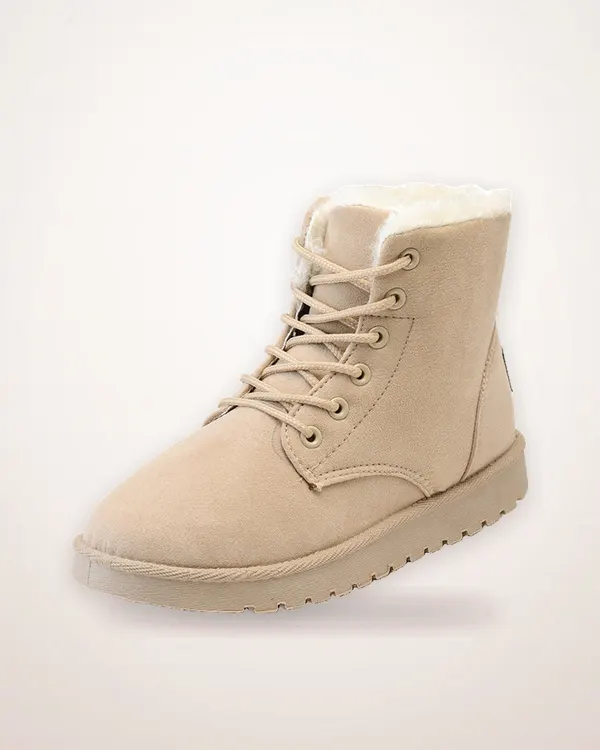
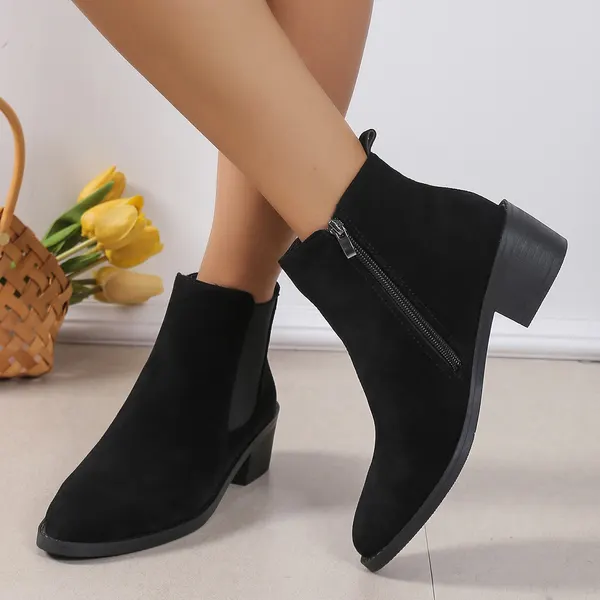
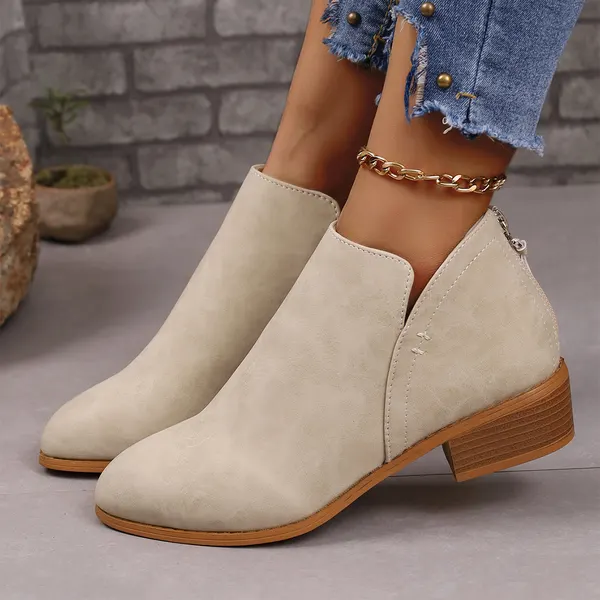
Round-toe and Chelsea styles are easier with denim. A suede Chelsea boot with a low rubber sole works with straight-leg jeans, a wool coat and a plain knit; a buckle detail adds a little edge without changing the clean ankle line. Chunky-heel suede boots with a rounded toe sit well with thick tights, straight-leg jeans and longer skirts. Lace-up styles bring a more casual, city-walk feel, so pair them with denim, a utility jacket or a simple sweater rather than something very formal.
Colour is a practical decision as much as a stylistic one. Black is the easiest base for tailoring and evening outfits, while brown, beige and khaki sit naturally with wool, denim and earth-toned knits. Grey and white make a softer contrast with dark trousers, and red, rose or purple can be the one strong note in an otherwise plain outfit. If you want one pair to work across most of your wardrobe, start with the colour you already wear most on your feet.
Finally, mind the gap at the ankle. A boot that sits close to the leg looks neat under straight trousers and midi skirts, while a wider opening can bunch under a slim hem. Try the boot with the trousers or skirt you plan to wear most, and check the line from the side as well as the front. The right ankle boot should feel steady, leave room at the toe and make the outfit you already own look more considered.
Care and storage
Care begins with the upper. Suede needs a soft brush and a little patience: brush away dry dust, let any damp patches dry naturally away from direct heat, then brush the nap back into place. Leather and PU can be wiped with a barely damp cloth and dried away from radiators or strong sun. Do not soak any upper, and do not use a hot hairdryer to speed things up.
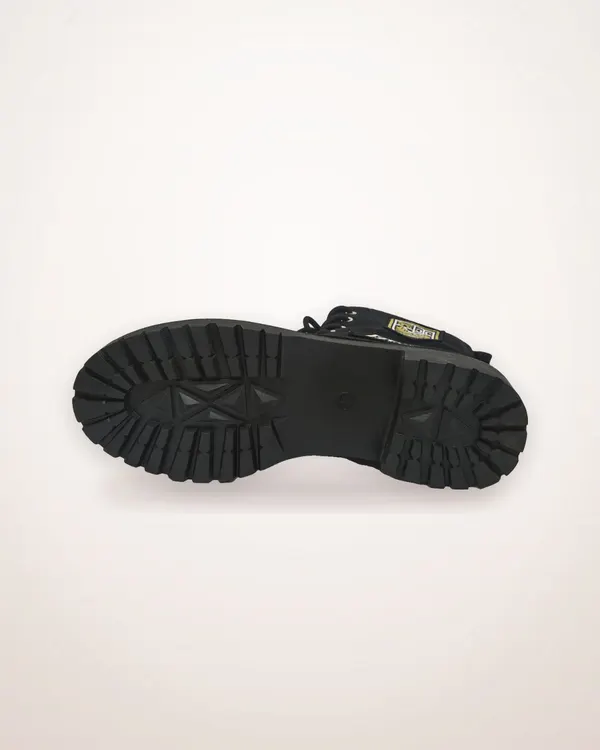
The sole and fastenings need attention too. Wipe rubber and composite soles with a damp cloth to remove grit and street salt, then dry them fully before storing. Check side zips for trapped fabric and ease them gently rather than forcing them; if a lace-up style has a buckle or lace detail, keep it fastened or tied as the product notes suggest. A little care at the end of the day keeps the shape and finish looking tidier for longer.
Store ankle boots upright with a little tissue or a soft shoe tree inside the shaft to hold the shape. Keep pairs away from damp floors, direct sunlight and radiators, and give them air after a long day rather than sealing them in a bag while still warm. If you wear one pair often, let it rest between wears. These are general habits rather than rules for every material, so always follow the specific care note on the product page.
Standout pieces
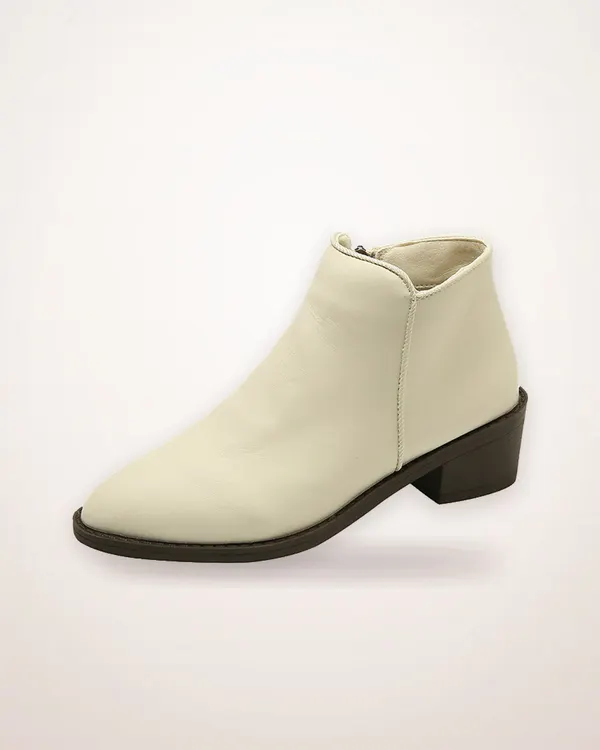
- Pointed-Toe Genuine Leather Ankle Boots: Genuine leather, fine sewing-thread detail and a thick 3-5cm heel give these pointed boots a clean, grounded line for trousers and midi skirts.
- Suede Look Chelsea Ankle Boots with Plush Lining: A short plush lining, soft suede and a low rubber sole make this Chelsea pair a warm, grounded choice for cold pavements.
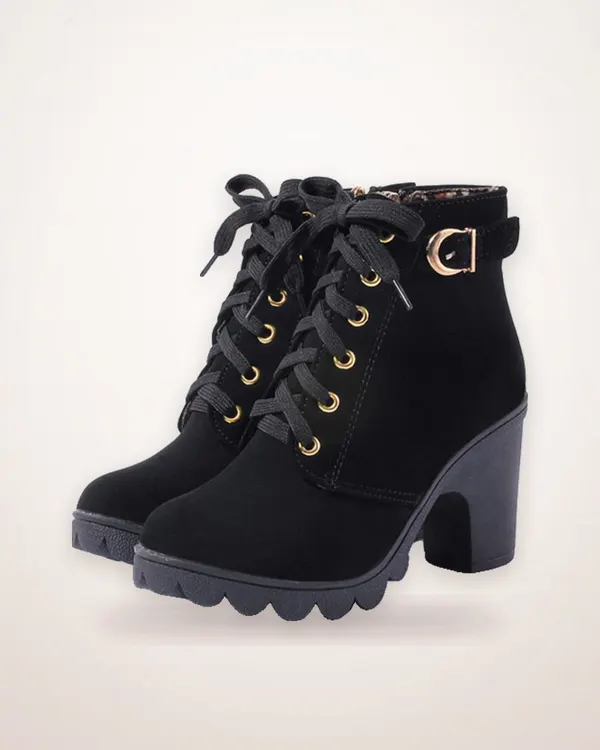
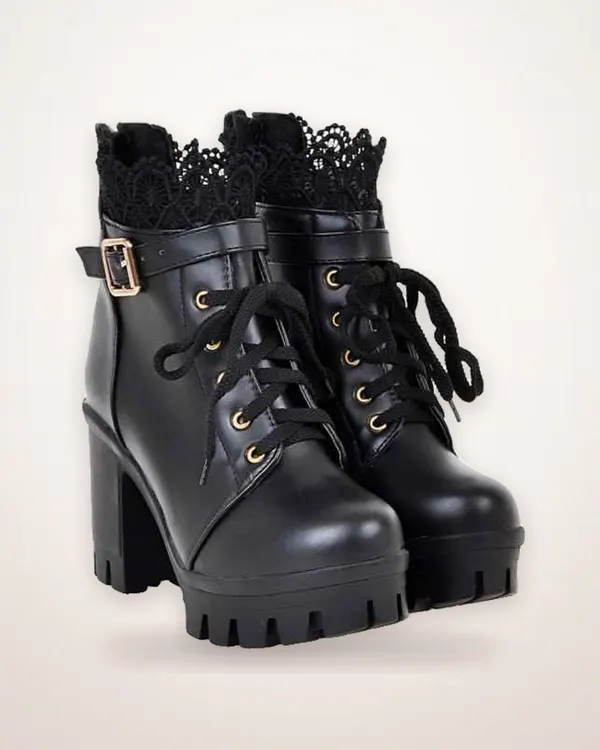
- Lace-Up Chunky Heel Ankle Boots: A lace-up front, round toe, chunky heel and rubber sole give these smooth PU boots a steady, city-walk character.
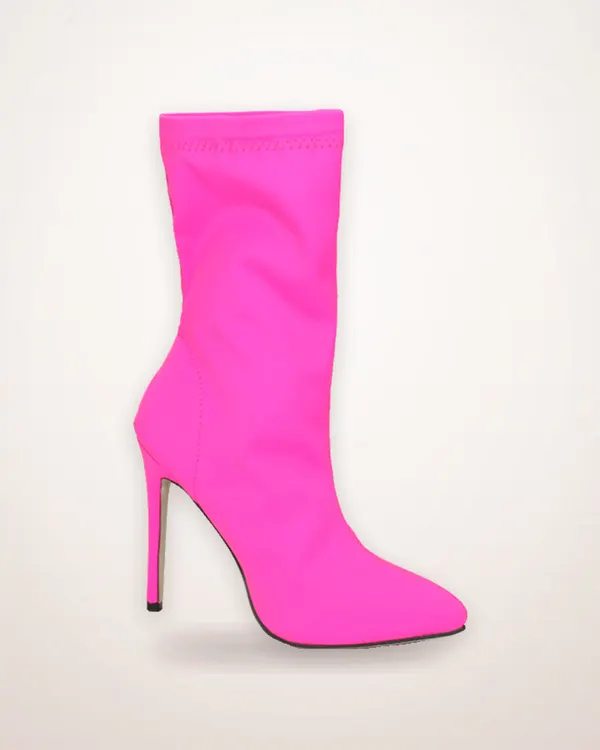
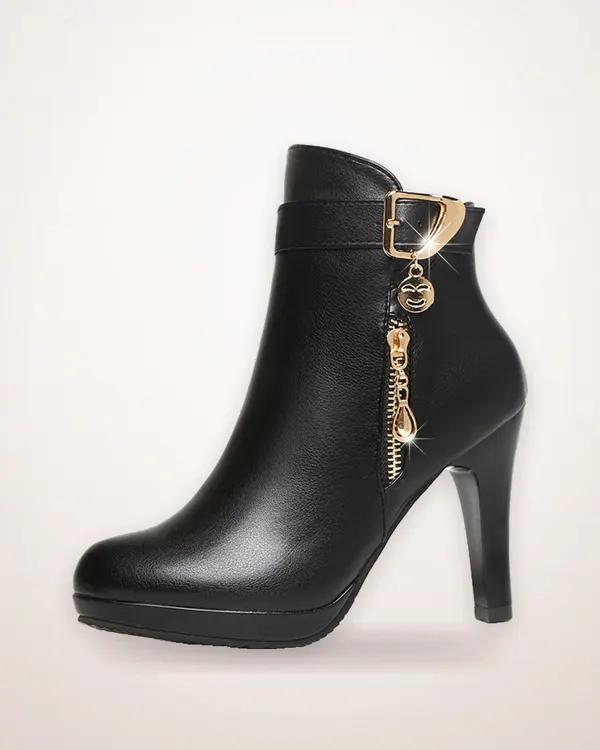
- Suede-Look Pointed-Toe Stiletto Ankle Boots: A sharp pointed toe, stiletto heel above 8cm and side zip give this suede pair a poised line for desk-to-dinner dressing.
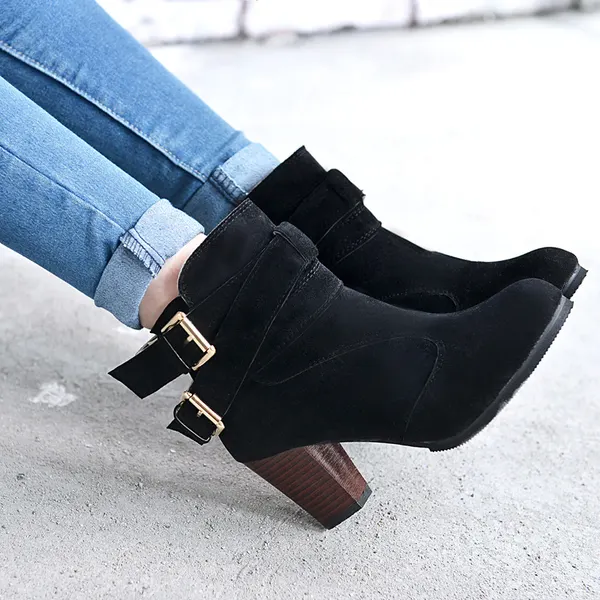
- Suede Look Chelsea Boots with Buckle Detail: Soft suede, a clean Chelsea line and a side buckle bring polish and a little motorcycle edge to denim and tailoring.
More ankle boots
Questions
How should ankle boots fit?
Measure your foot length and match it to the size chart for the pair you are considering, then check the product notes on sizing. If you sit between sizes or plan to wear thick socks, take the larger size where that advice is given, and make sure a pointed toe leaves a little room to move.
Are suede ankle boots suitable for wet weather?
Suede is best kept for dry days where possible, and a rubber sole helps with grip on cold pavements. If suede gets damp, let it dry naturally away from direct heat and brush the nap gently once dry.
What heel height is easiest to walk in?
A low chunky heel of 3-5cm is the steadiest option among our pieces, and it appears on several suede and leather styles. A fine 6-8cm heel gives a more formal line, while a stiletto above 8cm asks for a more deliberate stride.
How do I choose between pointed and round toe ankle boots?
A pointed toe draws a longer, sharper line under trousers and midi skirts, while a round toe leaves more room across the front and gives a softer profile. Try the boot with the trousers or skirt you wear most and check that the toe leaves a little room to move.
More shoes buying guides
This guide is written with the help of AI from the details on our own product pages and checked automatically before it is published. Product facts come only from those pages. All buying guides · Gift guides · Beauty Journal