


Turtlenecks: how to choose
A practical guide to choosing turtlenecks for warmth and line, from fine roll necks for layering to long sweater dresses for cold mornings.
At a glance
- Prices today
- $9.99 to $38.99
- Colours
- blue, red, black, green, white, khaki, grey, pink, brown, wine, navy, purple
- Materials
- knit, denim, polyester, acrylic, cotton, wool, fleece
- Finishes
- matte
- Details
- lined
From the product pages of the pieces in stock now. Prices update with stock and are shown in your currency.
Shop turtlenecks
All Knitwear & Hoodies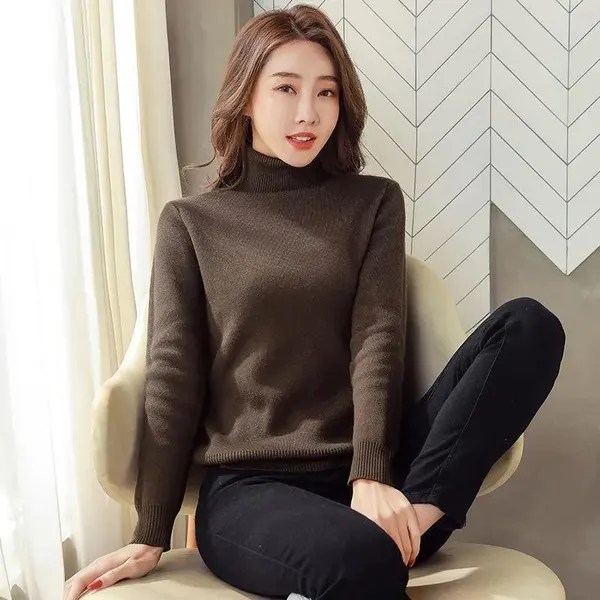
How to choose turtlenecks
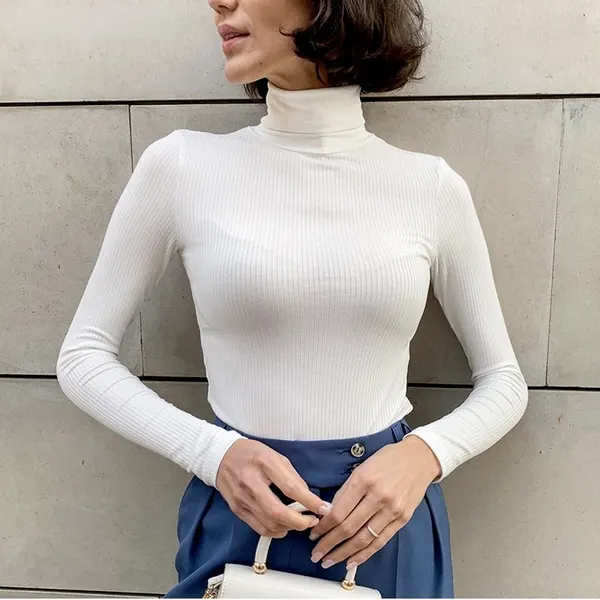
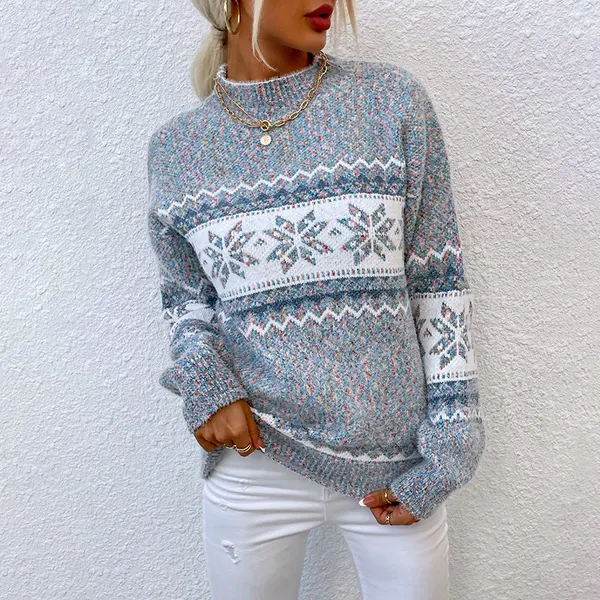
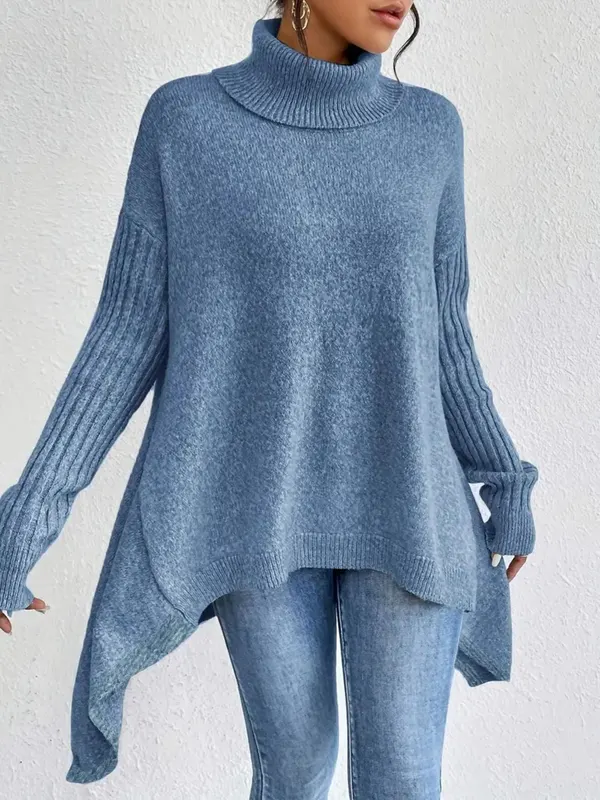
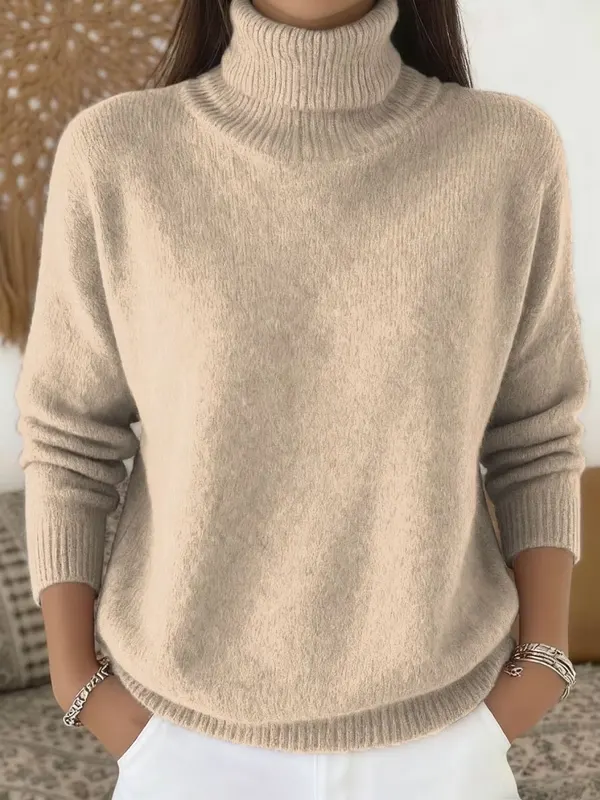
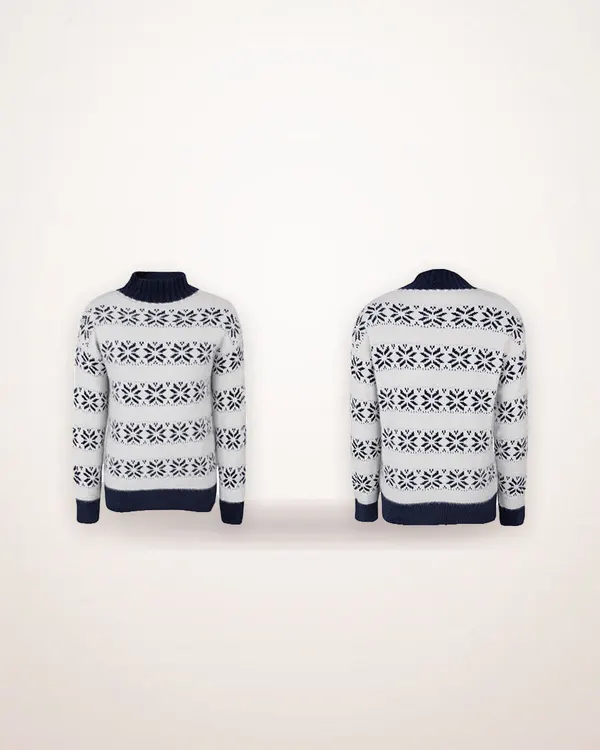
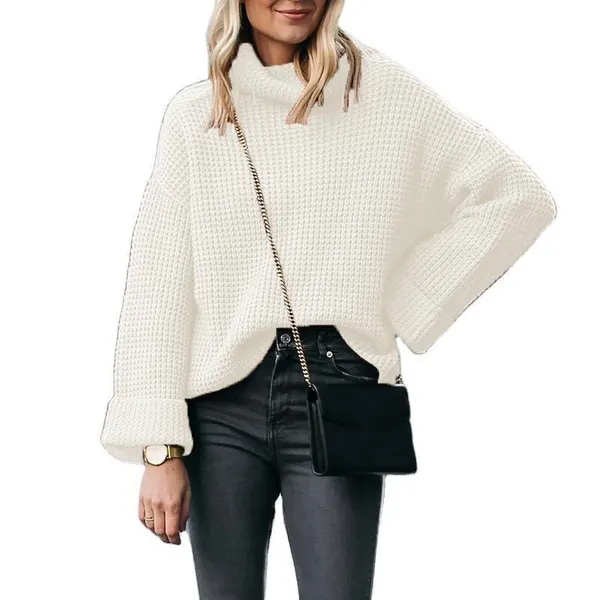
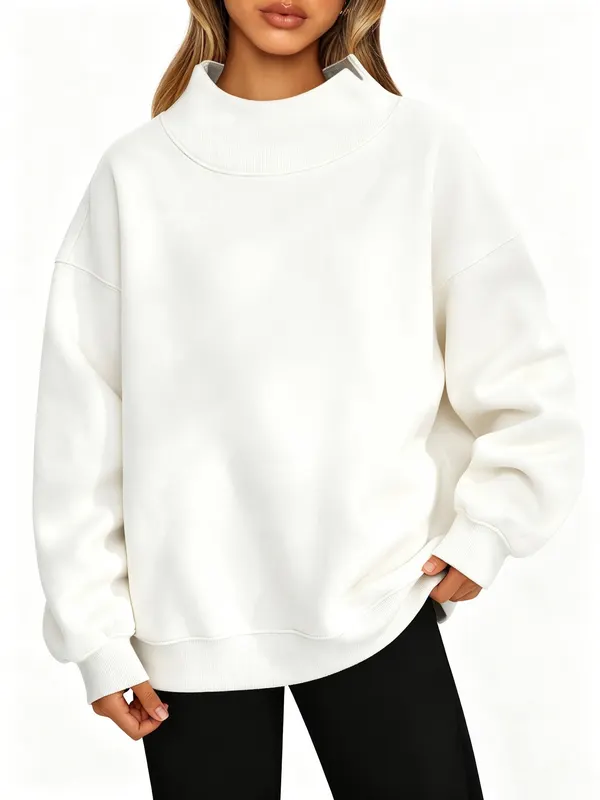
A turtleneck earns its place in a cold-weather wardrobe through the neckline, so start there. A high collar that folds softly against the throat, as on our fleece turtleneck knit sweater, holds warmth where you feel it first and keeps its shape through a long commute. A half turtleneck, such as the one on our snowflake jacquard sweater, rests just below the chin and leaves a little more air at the jaw. A fine roll neck sits close and slim, which makes it the easiest to slide under a coat or a blazer.
Then consider the line through the body. A close cut reads neat under tailoring, while a straight or relaxed cut gives you room to move and layer. Our sizing notes are worth reading before you choose: several of our turtlenecks run one to two sizes smaller than EU and US equivalents, so if you fall between two sizes, take the larger. The high neck acrylic knit sweater is cut as one size, shaped to sit close on a smaller frame and more loosely on a fuller one, with a bust range of 70 to 120cm and a 56cm sleeve.
Colour decides how hard the piece works. Black, navy, grey and white sit quietly under patterned coats and with denim, while wine, green, khaki and brown bring depth to a simple outfit. If you are building a first layer, choose a solid tone that matches the coats you wear most. If you already have the basics, a snowflake jacquard or a raised diamond pattern adds texture without shouting.
Materials, details and fit
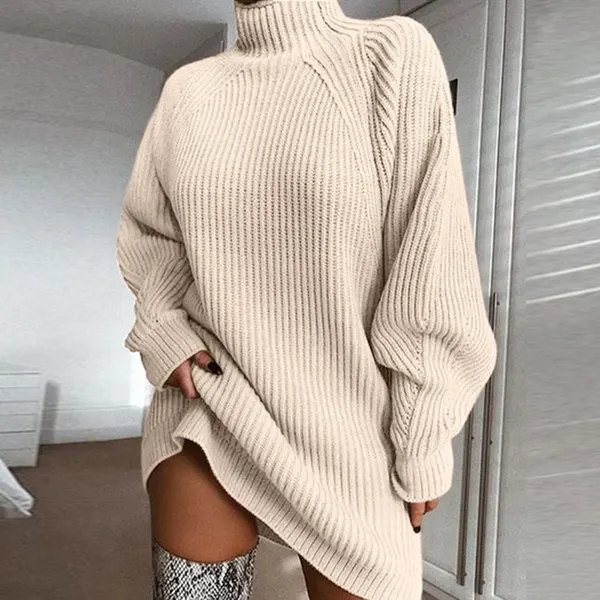
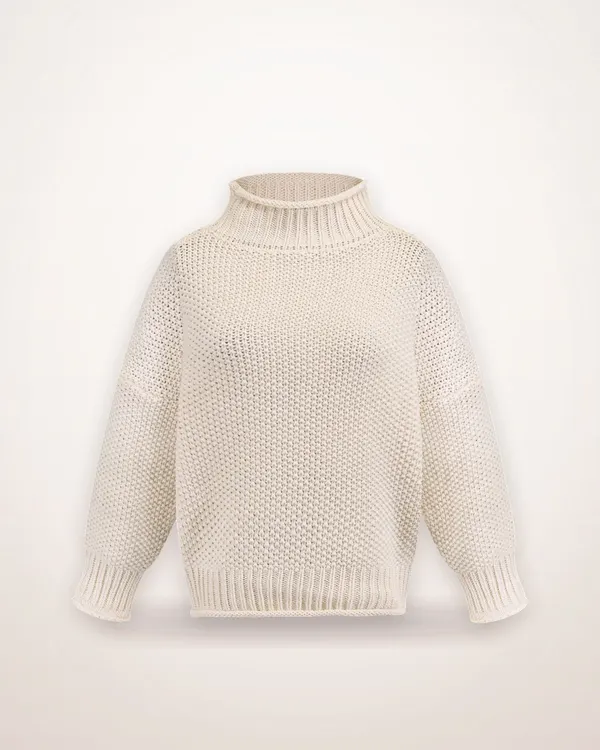
The knitwear in this guide covers a range of materials, and each brings a different hand. Fleece gives a dense, soft texture with a matte finish. Polyester knit, as on the long sweater dress and the loose turtleneck with stitching, falls in a smooth, even line and holds a quiet surface. Acrylic and cotton, used together in the solid turtleneck knit pullover, bring softness with a little structure. A fine-gauge acrylic and nylon blend, as in the rib knit roll neck, keeps its shape through a long day at a desk. Our finishes are matte throughout, which keeps the texture of the knit legible rather than glossy.
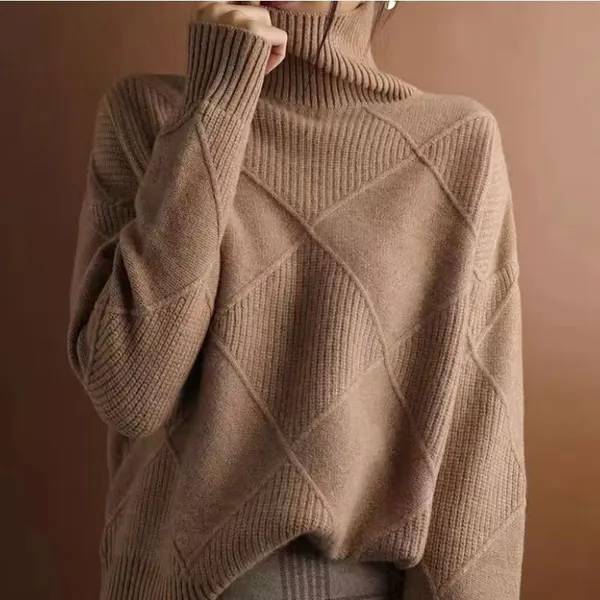
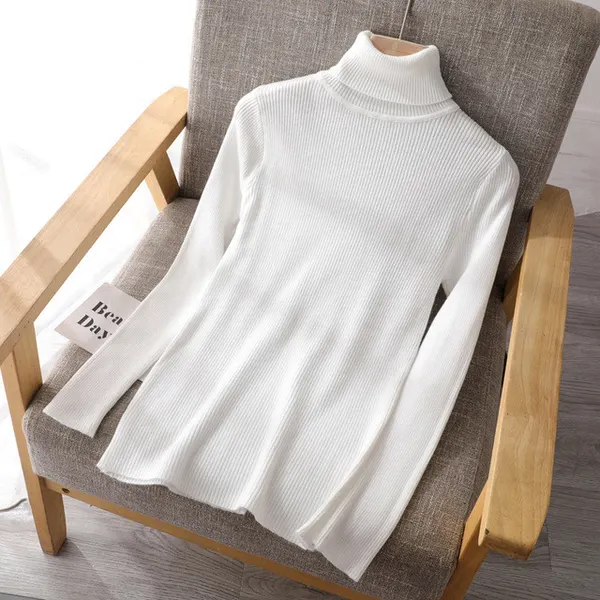
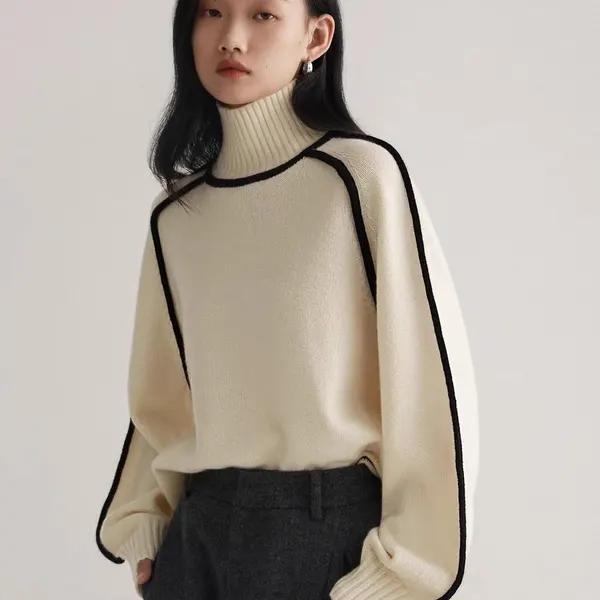
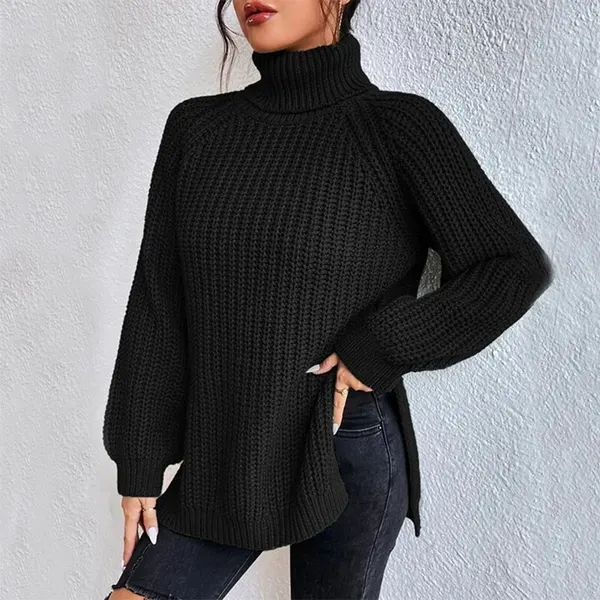
Details are where these pieces differ. The solid turtleneck knit pullover is lined in polyester, so it glides over a shirt or a fine camisole instead of catching. The loose turtleneck sweater with stitching has stitched detail at the neck and seams, a neat finish that reads considered rather than busy. The turtleneck sweater with raised diamond pattern has raised rhombus panels stitched into place, giving the front a quiet texture that catches the light. The fine-gauge roll neck is ribbed, with faint vertical lines that add a little shape.
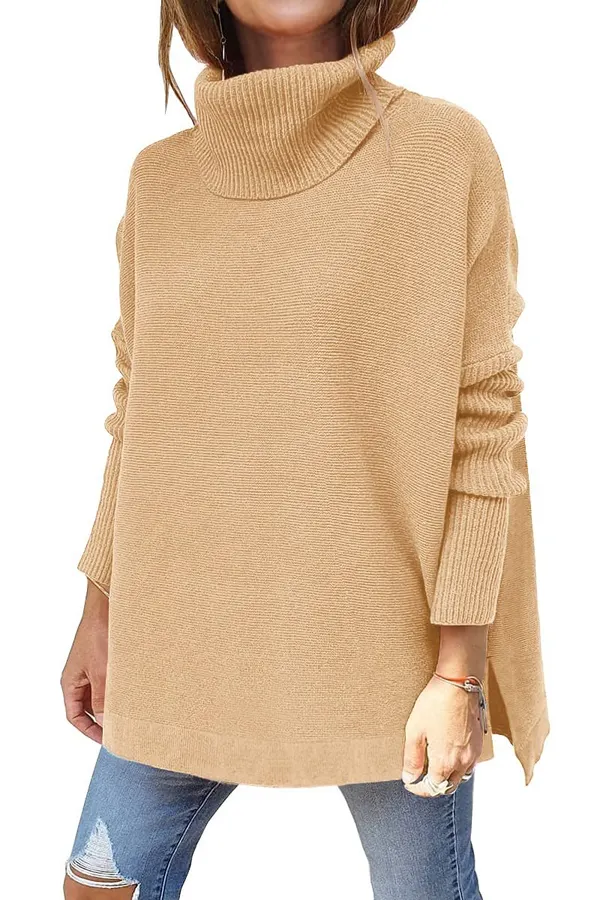
Fit follows the same logic. A turtleneck should sit close at the neck without pressing and fall cleanly from the shoulders. If you prefer a relaxed line, take your usual size where the cut allows, or size up where a piece is described as running small. The long knit sweater dress is cut to fall straight through the body, so take your usual size for a relaxed line and go up one if you sit between two. The fine-gauge roll neck falls to hip level, between 50cm and 65cm, which keeps it tidy under a jacket.
How to style them
Start with tailoring. A fine-gauge roll neck is the most obliging layer under a blazer or a close coat because it is knitted thin and smooth, and its straight cut finishes at the hip without bunching. Wear it alone with a pleated skirt or tailored trousers, or slide it under a sleeveless dress for extra warmth at the throat. The solid turtleneck knit pullover, with its polyester lining, is the easier choice over a shirt: the lining lets it move over the cotton beneath rather than gripping.
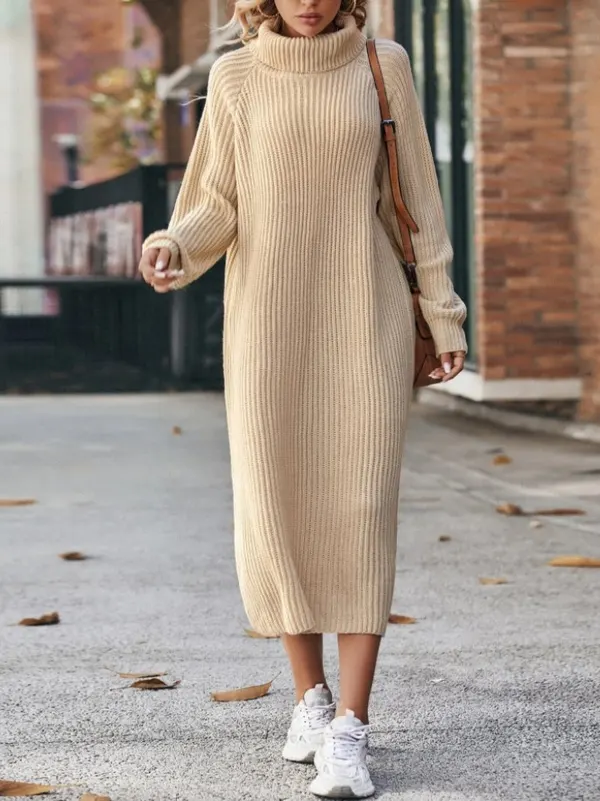
Dresses do the work for you on the coldest mornings. The long knit sweater dress falls in one clean column from a high neck, so the simplest pairing is opaque tights and flat boots. Add a long coat and a scarf only if the collar needs more protection. The loose turtleneck knit sweater dress follows the same idea in acrylic knit, with a relaxed line from a high neck to a long hem, which suits a desk day as well as a lunch out. Keep the palette solid and the accessories quiet so the knit texture stays the focus.
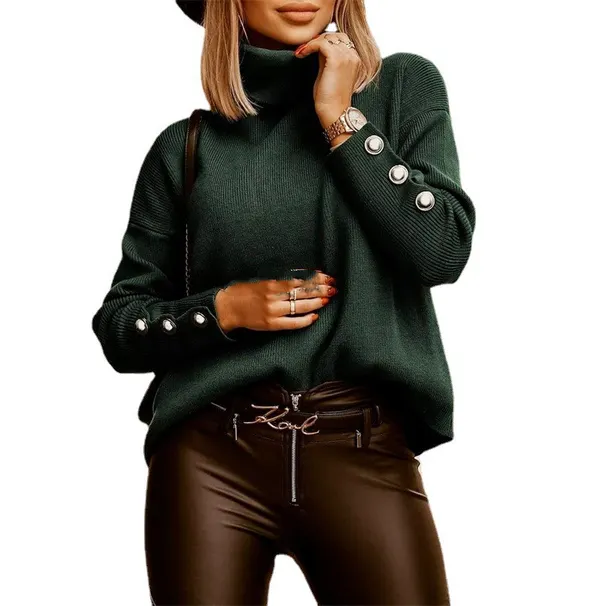
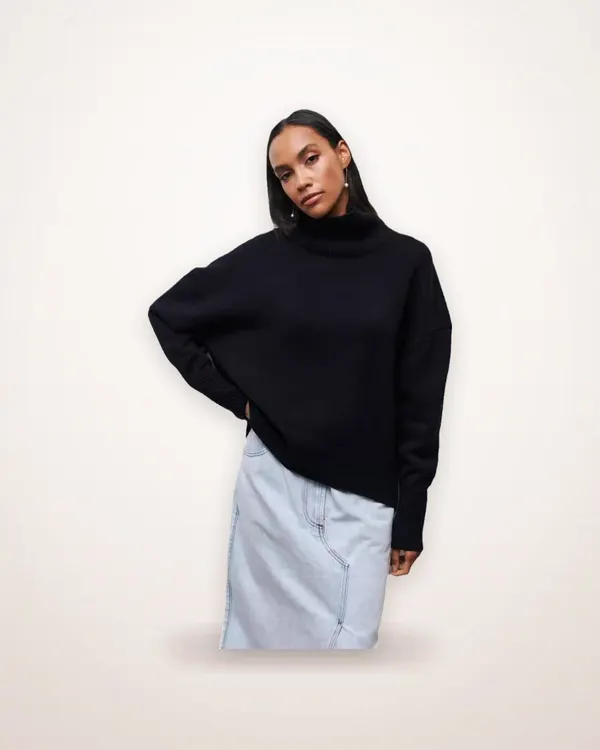
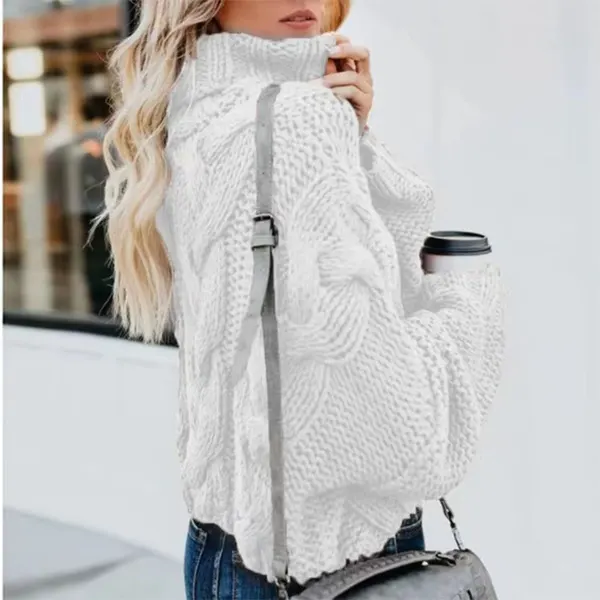
For weekends, let the surface do more. The snowflake jacquard half turtleneck sits well with denim and ankle boots, and its contrast yarn reads festive without dressing up. The turtleneck sweater with raised diamond pattern falls loosely through the body, so it sits neatly over jeans or a midi skirt; the raised panels add enough texture that a plain coat is all you need on top. The loose turtleneck sweater with stitching, in white, khaki, black, dark green, light grey or orange, works as a quiet base under a gilet or an open cardigan.
Care and storage
Always begin with the care label on the piece, because fibres and finishes differ and the label is the only reliable guide. As a general rule, wash knitwear less often than you think you need to: air it between wears, spot-clean small marks, and wash when the collar or cuffs begin to feel tired. Use a gentle cycle or hand wash according to the label, with a mild detergent and cool water, and avoid wringing or twisting the knit.
Drying matters as much as washing. Press the water out in a clean towel rather than wringing, then reshape the piece and dry it flat, away from direct heat and sunlight. Hanging a wet knit will pull the shoulders and stretch the collar, so reserve hangers for structured jackets. Once dry, fold the piece rather than hanging it, and store it in a drawer or on a shelf with a little room to breathe.
For storage, keep knits clean and fully dry before they go away for the season. Fold them with the collar smoothed flat, and use a breathable cotton bag for longer storage rather than a sealed plastic one. Cedar blocks or lavender sachets are traditional companions in a knit drawer, and rotating what you wear keeps the fibres from settling into one shape. A soft brush can lift surface fluff from a matte knit, and a small comb made for knitwear will ease any pilling without pulling the yarn.
Standout pieces
- Fleece Turtleneck Knit Sweater: A dense, soft knit with a high turtle neck that folds close against the cold and a quiet matte finish, warm for the shortest days and neat enough for the office.
- Fine-Gauge Rib Knit Turtleneck: Knitted thin and smooth in an acrylic and nylon blend with faint vertical ribs, it slides under a blazer and falls to hip level between 50cm and 65cm.
- Turtleneck Long Knit Sweater Dress: A high neck and a long, unbroken column of soft polyester knit in a matte hand, cut to fall straight and pair simply with opaque tights and flat boots.
- Solid Turtleneck Knit Pullover: Acrylic and cotton bring softness to a thick knit, and a polyester lining glides over a shirt or fine camisole so nothing catches underneath.
- Snowflake Jacquard Half Turtleneck Sweater: Contrast yarn picks out snowflakes across a smooth polyester jacquard, with a half turtleneck that rests just below the chin in four colours including pink and blue.
More turtlenecks

Questions
What is the difference between a turtleneck and a roll neck?
The terms are often used interchangeably. A roll neck usually has a longer collar that folds over on itself, while a turtleneck collar can be shorter and stand close to the throat. Both do the same job of holding warmth at the neck.
How should a turtleneck fit at the neck?
It should sit close without pressing, with enough room to slip a finger between the collar and your throat. If the collar feels tight enough to leave a mark, size up or choose a looser style.
Can I wear a turtleneck under a blazer?
Yes, and a fine-gauge roll neck is the easiest to layer because it is knitted thin and smooth. A close-fitting turtleneck in a smooth knit will sit under a blazer without adding bulk at the shoulders.
How do I keep a turtleneck collar from stretching?
Fold the piece rather than hanging it, and never hang it wet. Reshape the collar with your hands after washing and dry the piece flat, which helps it hold its line.
More clothing buying guides
This guide is written with the help of AI from the details on our own product pages and checked automatically before it is published. Product facts come only from those pages. All buying guides · Gift guides · Beauty Journal