


How to care for sneakers
A practical guide to keeping canvas, leather, mesh and denim sneakers clean and ready to wear.
At a glance
- Prices today
- $10.99 to $112.99
- Colours
- black, white, pink, red, blue, green, beige, purple, grey, brown, yellow, orange
- Materials
- lace, denim, rubber, mesh, leather, cotton, knit, eva, canvas, synthetic
- Details
- lace-up, breathable, lightweight, adjustable, lined, non-slip, slip-on
Shop sneakers
How to choose sneakers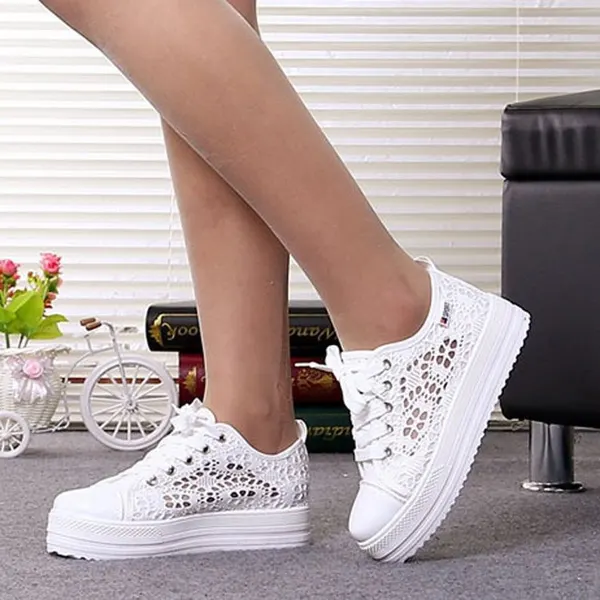
Everyday care for sneakers
Start with a quick brush after each wear. A soft brush lifts dust from canvas, mesh and denim before it settles into the weave, and a dry cloth takes surface marks off leather. Check the sole edge too, since grit trapped there can rub against the upper when you walk.
Deal with marks soon after they appear. Blot spills with a clean cloth rather than rubbing them wider, then let the shoe air dry away from direct heat. Stuff the toe with plain paper to hold the shape while it dries, and leave the laces open so air can move through the tongue and lining.
Rotate your pairs across the week. Giving a sneaker a full day to dry inside helps the lining and insole stay fresh, especially with mesh and cotton linings. If the shoe feels damp after a wet walk, take out any removable insole and let both parts dry fully on their own.
Cleaning by material
For canvas, brush off loose dirt, then wipe with a cloth wrung out in mild soapy water. Work in small circles over the upper and rinse the cloth often. Do not soak the whole shoe or put canvas in the washing machine, since extra water can weaken the shape and take ages to dry.
Leather needs less water and more patience. Wipe with a barely damp cloth, dry naturally, then apply a small amount of leather conditioner if you use one. Keep leather away from radiators and hairdryers, and test any product on a hidden patch first. For cowhide, cow leather or pigskin pieces, a soft cloth and a gentle circular motion is enough for everyday marks.
Mesh and synthetic uppers pick up dust in the gaps, so use a soft brush and a low suction vacuum if you have one. Spot clean denim with a damp cloth and mild soap, working from the edge of the mark inward. Blot rather than scrub so the colour stays even.
Rubber and EVA soles clean up with a cloth and mild soap. A dry brush can shift mud from the tread, and a little white vinegar on a cloth helps with scuffs on white rubber if you use it carefully. Wipe away residue with water and dry fully before wearing.
Storing them well
Store sneakers where air can move. A shelf or the floor of a wardrobe is better than a sealed box, and a cotton dust bag protects canvas and leather without trapping damp. If you stack pairs, put the heavier soles at the bottom and keep white canvas away from darker leather to avoid colour transfer.
Keep the shape with paper or shoe trees. Plain paper works well for canvas and mesh, and cedar shoe trees suit leather if you already use them. Avoid newspaper, since ink can mark the lining, and never store a damp shoe in a closed bag.
Use the laces and straps as they were designed. Loosen lace-up fronts before putting shoes away, and fasten any straps so they do not crease the upper. For high-tops and low-tops alike, a little space between pairs stops soles rubbing and keeps the collars from bending.
Small repairs and touch-ups
Laces are the first thing to show wear. Replace them when the ends fray or the lace stops holding a knot, and choose a length that lets you tie without long loops. A spare pair in a neutral colour keeps canvas and leather sneakers looking tidy.
Scuffs on rubber soles can be buffed with a soft eraser or a cloth and mild soap. For leather, a tiny amount of colour-matched cream on a cloth can soften the look of a light scuff, but test it first. Do not use abrasive pads on leather, canvas or mesh.
If a sole starts to separate or a seam opens, stop wearing the pair and take it to a repairer. A cobbler can advise on stitching and sole work, while home glue often makes the repair harder later. Keep the insoles dry and check them for wear, since a flat insole changes how the shoe feels.
Standout pieces
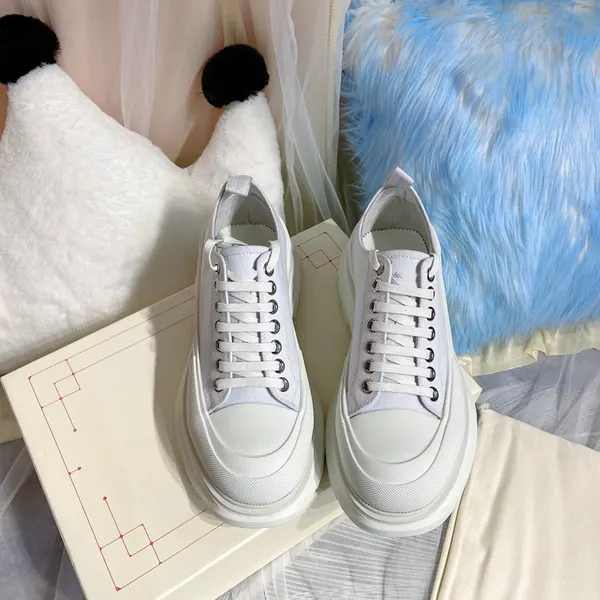
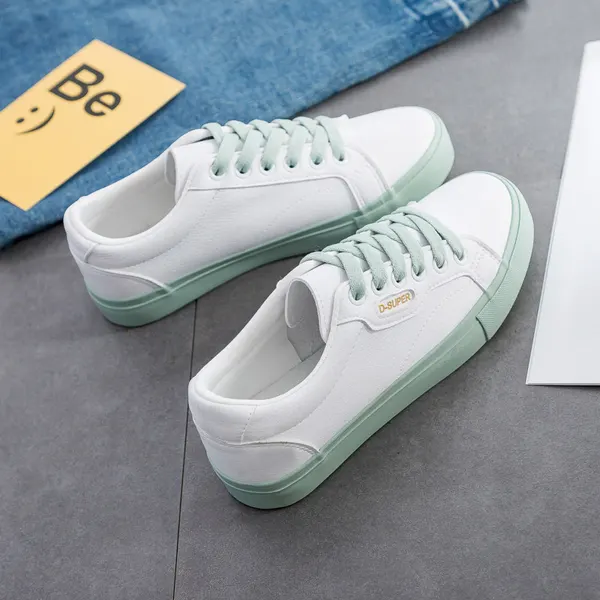
- White Canvas Dad Sneakers: The upper is plain white canvas on a low rubber sole, with a rounded toe that leaves room to move.
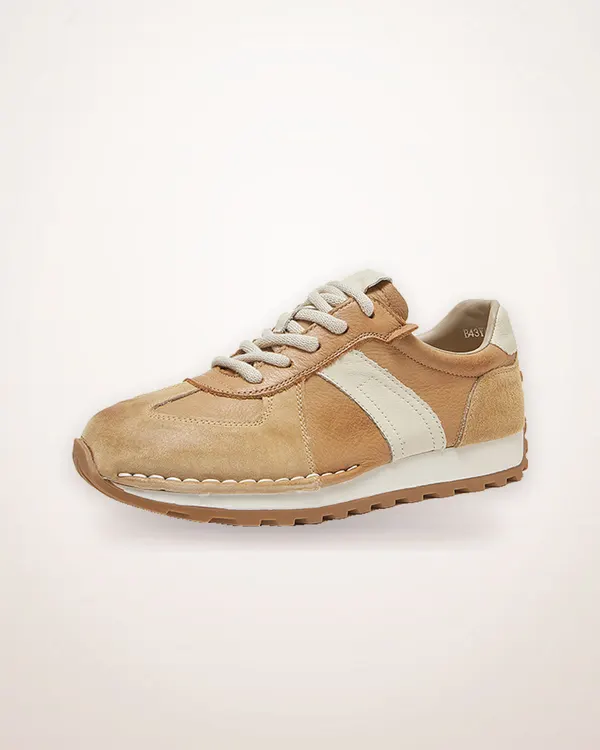
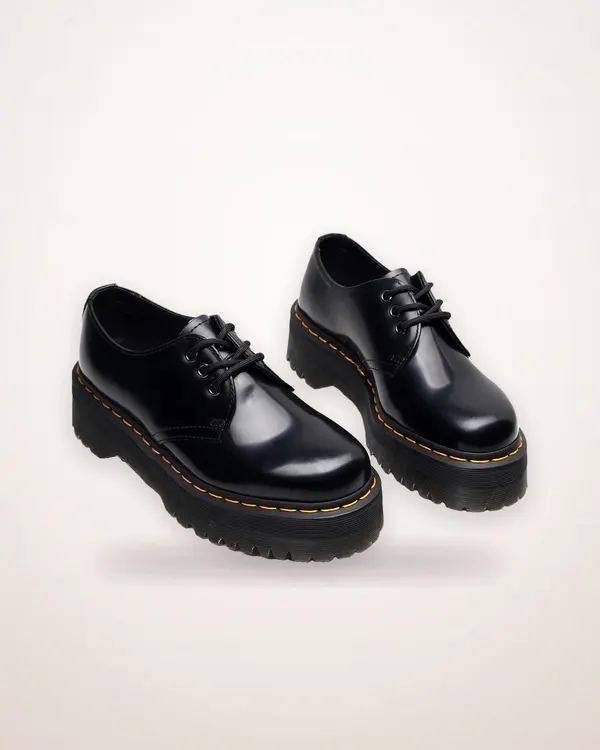
- Retro Leather Platform Sneakers: Smooth cow leather, a low platform TPR sole, a pigskin insole and cloth lining give this pair a considered shape for long city days.
- Denim Platform Low-Top Sneaker: A denim upper, raised rubber sole and cloth lining give this low-top a soft matte texture and a little lift.
- White Mesh High-Top Sneaker: Mesh panels and cut-out detailing break up the white PU upper, while criss-cross straps and back lacing keep the front smooth.
Questions
How often should I clean white canvas sneakers?
Clean them when you see marks or every few wears, whichever comes first. Brush off dust, wipe with a cloth wrung out in mild soapy water, and let them air dry away from heat. Do not machine wash them, since that can soften the shape.
Can leather sneakers get wet?
Light rain is not a problem, but dry leather naturally afterwards with paper inside and a cloth over the surface. Keep it away from radiators and hairdryers. If the leather is soaked, let it dry slowly and condition it only when fully dry.
How do I keep sneakers fresh between wears?
Air them out after each wear and loosen the laces so moisture can escape. If the lining feels damp, remove any removable insole and let both parts dry fully on their own. A little bicarbonate of soda in a cloth bag overnight can help with odour.
Should I put sneakers in the washing machine?
It is better to clean them by hand. Machine washing can distort canvas, loosen glued soles and wear out mesh and leather. Use a soft brush, mild soap and a damp cloth instead, then air dry.