


Sunscreens: how to choose
How to choose a sunscreen for face and body, from fluid creams and mineral veils to sticks and setting powder, and how to wear each one well.
At a glance
- Prices today
- $6.99
From the product pages of the pieces in stock now. Prices update with stock and are shown in your currency.
Shop sunscreens
How to choose sunscreens
Begin with when and where you will apply it. Sunscreens built for the face tend to be fluid and quick to settle, which suits a morning routine that finishes with makeup; sticks and powders are made for the bag, the car and the desk drawer, where a neat top-up matters more than a full routine. If you spend long afternoons outdoors, a waterproof formula earns its place; if your skin feels tight by mid-morning, look for one with a hydrating feel.
Then think about finish. A cream gives the most familiar, cushioned feel and works well on bare skin or beneath foundation. A stick lays down a thin, even layer in a couple of passes and suits shoulders, cheekbones and the backs of hands. A powder is the quiet finisher: it sets makeup, softens shine and lets you refresh without disturbing what is underneath. None of these is better than the others; they answer different questions.
Finally, be honest about your habits. The sunscreen you will actually wear is the one that fits your day, so choose a texture you do not mind repeating. If you dislike the feel of cream on your hands, a stick solves it. If powder makes your base look flat, keep it for the T-zone. Choose for the routine you have, not the one you intend to build.
Formulas, finishes and shades
Across our sun care you will find two mineral filters, titanium dioxide and zinc oxide, alongside ingredients that make the wear comfortable: glycerin and hyaluronic acid for a hydrated feel, aloe vera and panthenol for softness, centella and vitamin E in some formulas, and niacinamide in one daily face sunscreen. The mineral pieces are described as soft veils rather than heavy creams, and the textures are built to spread without chalkiness.
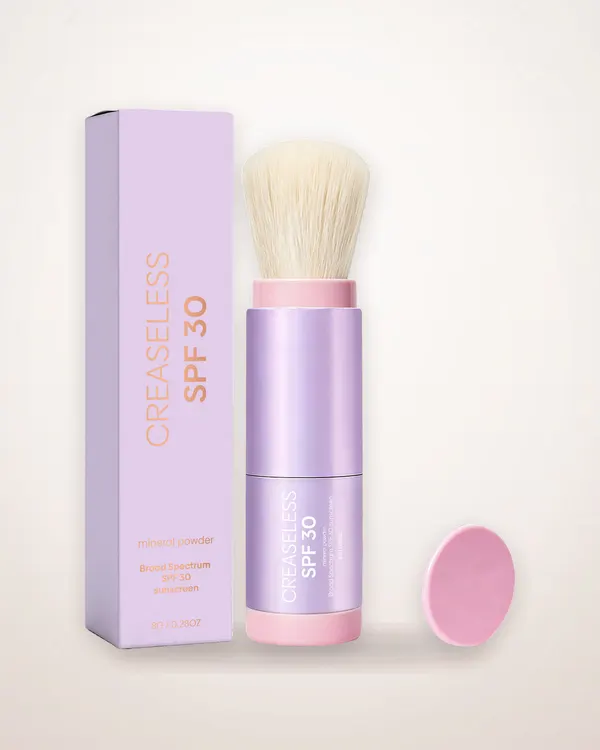
Finishes fall into four broad types: cream, stick, powder and a natural finish that leaves skin looking like skin. Creams and fluids are the most forgiving for anyone new to daily sun care. Sticks are the most portable and are easy to sweep over exposed areas. Powders are for setting and for touch-ups on the move, and a twist-up brush keeps the application neat.
Colour is simple here: the range is cream-toned. The mineral setting powder is light beige, which settles over makeup with a soft matte look and helps keep shine in check. If you wear a deep foundation, use the powder as a targeted shine-control step on the T-zone and around the nose rather than a full-face sweep, and keep the creams and fluids for the rest of the face.
Texture also decides how a formula behaves under makeup. A fast-absorbing lotion disappears quickly and leaves a soft, smooth surface; a creamier mineral formula sinks in with a brief massage. If you layer several products in the morning, choose the lightest texture you can and let each one settle before the next.
How to apply and wear them
Follow the instructions on the piece you choose, because the order of steps matters. Our face sunscreens go on as the last step of your morning skincare routine, before makeup, onto clean, dry skin. Squeeze a coin-sized amount onto your fingertips for the face, or twist up a stick and sweep it directly over the face, neck and any exposed areas of the body.
Give it time. One of our formulas is applied 15 to 20 minutes before going outdoors, massaged in as an even layer until absorbed. Even where a product settles quickly, a short pause keeps foundation from dragging. Press makeup on with a light hand rather than buffing hard, and work outward from the centre of the face, then gently over the cheeks from bottom to top.
Reapply through the day, particularly after swimming, towelling or a long stretch outdoors. A stick or powder is easiest over makeup: sweep or press, then blend the edges with a clean finger or a small brush. Do not forget the ears, the hairline, the back of the neck and the tops of the hands, which are the areas most often missed.
If you wear a stick on the body, let it warm against the skin for a second before gliding, and go back over the shoulders and forearms a second time. A powder is best pressed rather than swept when you are refreshing over foundation.
Hygiene, storage and shelf life
Start with clean, dry hands, and keep stick formulas for your own use rather than passing them between people. Wipe the surface of a stick with a clean tissue after use, and remember the powder brush: wash it regularly with mild soap and warm water, reshape it and let it dry flat, away from direct heat.
Store sun care out of direct sunlight and away from hot cars and radiators. A closed cap or lid keeps the texture from drying out or picking up fluff from a bag, and standing sticks upright stops the formula from softening into the lid. A bathroom shelf that steams daily is not the kindest home; a drawer or cupboard is better.
Respect the period-after-opening symbol on the pack and the texture itself. If a cream separates, a stick turns grainy or stiff, or the smell changes, it is time to replace it. Write the month you opened it on the base with a marker so you are not guessing later, and keep a spare stick in the bag you use most so a top-up never depends on remembering.
Questions
Should sunscreen go before or after moisturiser?
Apply it as the last step of your morning skincare routine, after serum and moisturiser, and before makeup. If your skin feels tight, a hydrating formula can stand in for the moisturiser step; otherwise let each layer settle briefly before the next.
How much sunscreen should I use on my face?
A coin-sized amount squeezed onto your fingertips is a good guide for the face and neck. Spread it outward from the centre and add a little more for the ears, hairline and the backs of the hands.
Can I put makeup over sunscreen?
Yes. Choose a fluid or cream that settles without heaviness, wait a minute for it to absorb, then apply makeup with a light hand. Sticks and powders are the easier route for refreshing later in the day.
How should I store a sunscreen stick?
Keep the lid closed, stand it upright and store it away from direct sun and heat. Wipe the surface after use, and replace it if the texture or smell changes.
More skin & body buying guides
This guide is written with the help of AI from the details on our own product pages and checked automatically before it is published. Product facts come only from those pages. All buying guides · Gift guides · Beauty Journal