


How to care for bras and bralettes
How to wash, dry, store and look after bras and bralettes, with practical notes for lace, cotton, mesh and satin pieces and the styles we carry.
At a glance
- Prices today
- $5.99 to $25.99
- Colours
- black, white, pink, red, grey, purple, blue, beige, nude, brown, green, wine
- Materials
- knit, nylon, lace, polyester, cotton, spandex, mesh, acrylic, satin
- Finishes
- sheer
- Details
- stretch, underwire, wireless, lightweight, breathable, adjustable, lined, padded
Shop bras and bralettes
How to choose bras and bralettes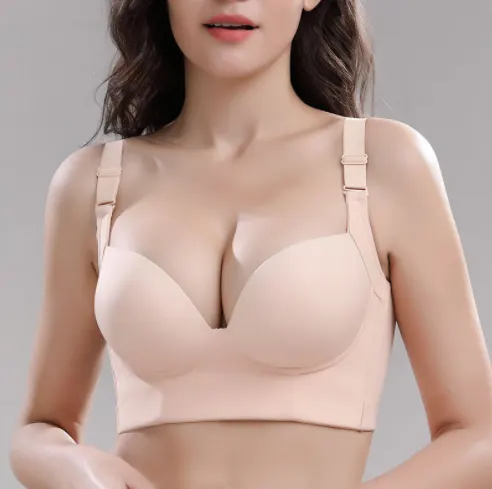
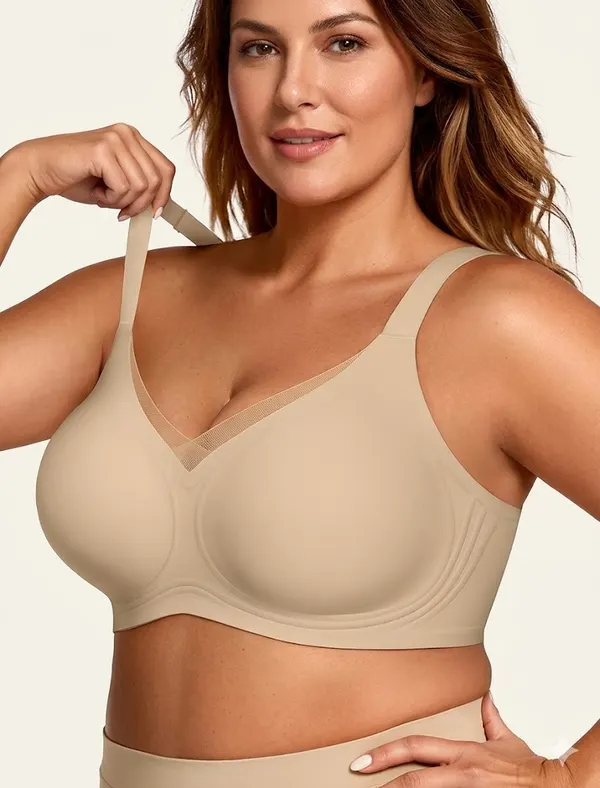


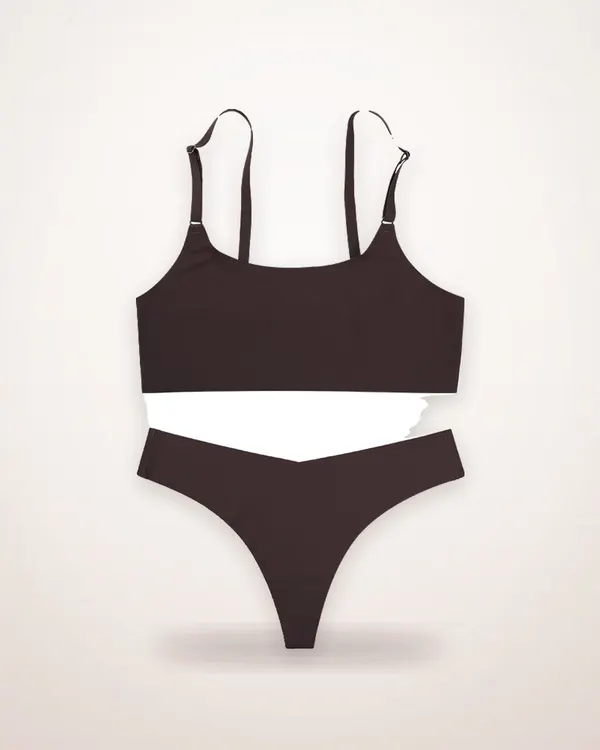
Everyday care for bras and bralettes
Give a bra a day off between wears. The elastic in a band needs time to recover and the fabric needs air. Wear one, hang it over a chair back overnight, then reach for another. Two or three wears between washes suits most days, and one wear if you have been sweating.
Fasten the hooks before the bra goes anywhere near water or a drawer. An open hook catches lace, mesh and fine knit, and it does the damage just as easily in storage. On a new piece, start on the loosest hook and tighten as the band relaxes. Set the straps so the band sits level round your ribs and the cups hold without gaping. If the back rides up, go tighter on the hooks before you shorten the straps.
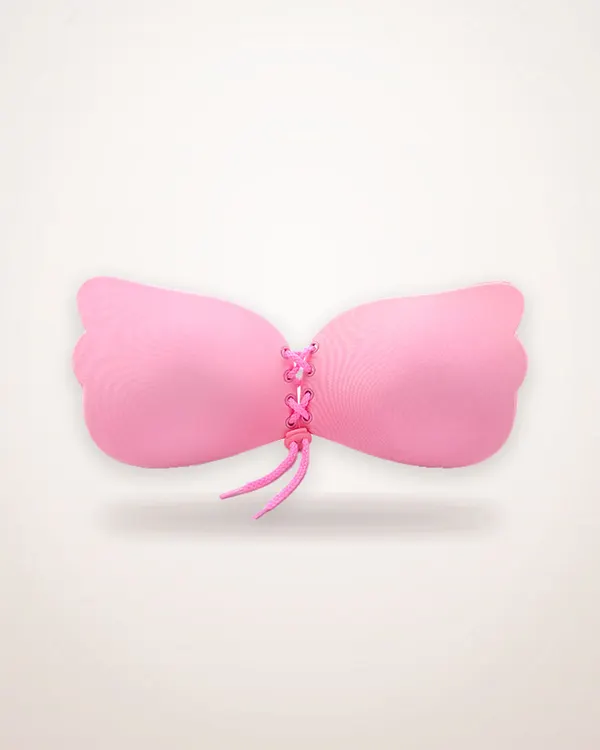
Adhesive pieces need their own routine. Place the cups on clean, dry skin with nothing underneath, line the centre up with the front closure, then press the thin edges down firmly. Moisturiser, powder or sweat under the edge loosens the hold, so put this one on last.
Heat is the main enemy of stretch fabric. Hot water, a tumble dryer, a radiator and a hot iron all shorten the life of spandex and nylon. Cool water and air drying keep the give.
Cleaning by material
Hand washing is the kindest method for lace, mesh, moulded cups and anything with a wire. Fill a basin with cool water and a little mild detergent, let the piece soak for ten minutes, then press the water through with your hands. Do not rub, twist or wring. Rinse in cool water until it runs clear, press the bra between two towels, then lay it flat and shape the cups with your hands while damp.
Lace and mesh snag. Turn them inside out, keep them away from zips and loose hooks, and use a mesh laundry bag if you wash them in a machine on a cool, gentle cycle. Skip fabric softener, which coats the fibres and dulls the stretch.
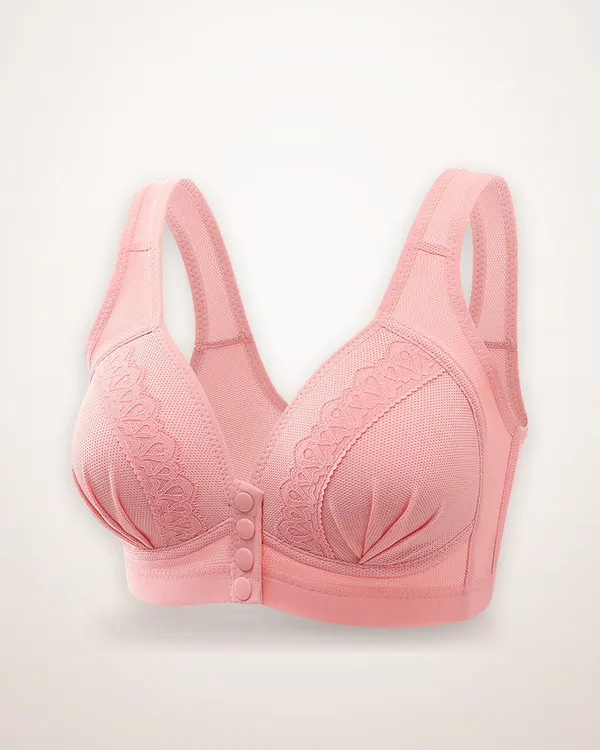
Cotton-rich pieces, like a front-button cotton bra or a crossover sleep bra, handle cool water well and dry flat without much fuss. Line dry them rather than tumble drying, and lay a wet piece flat instead of hanging it by the straps, which dry stretched.
Nylon, polyester, spandex, satin and acrylic embroidery all prefer cool water and mild detergent, with no chlorine bleach. Wash an embroidered bra inside out and let it air dry, since a hot iron flattens the stitching.
Storing them well
Fold a bra in half with one cup nested inside the other, or lay it flat in a drawer with the cups facing up. Hanging by a strap stretches both the strap and the band, and an open hook will find the nearest piece of lace.
Leave room in the drawer. A crushed cup creases at the edge and a bent wire never sits right again. Give lace, mesh and embroidered pieces their own corner so nothing rough rubs against them.
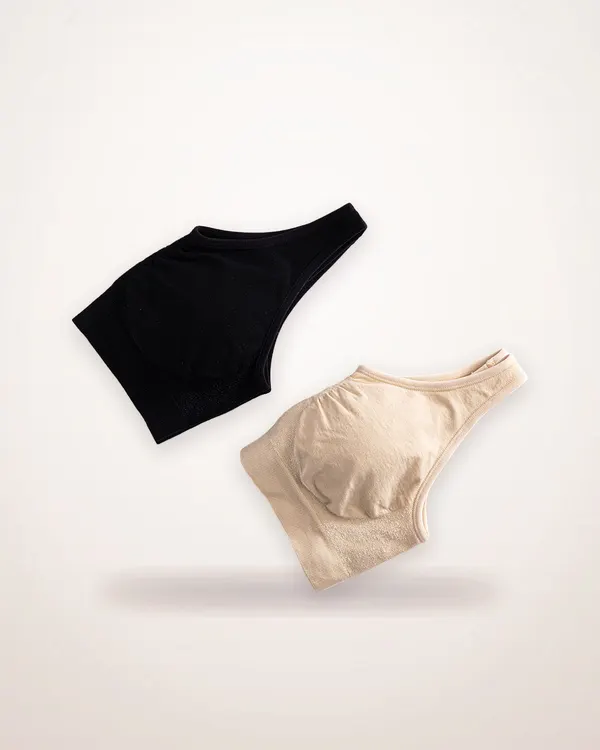
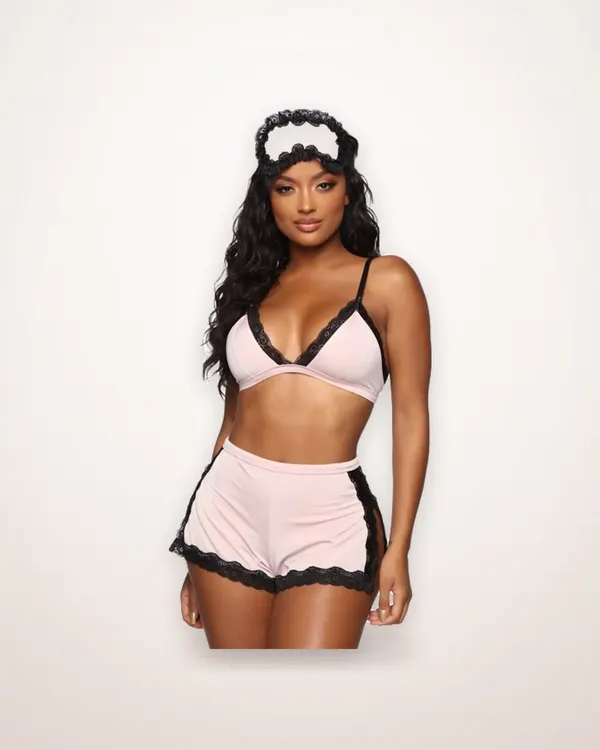
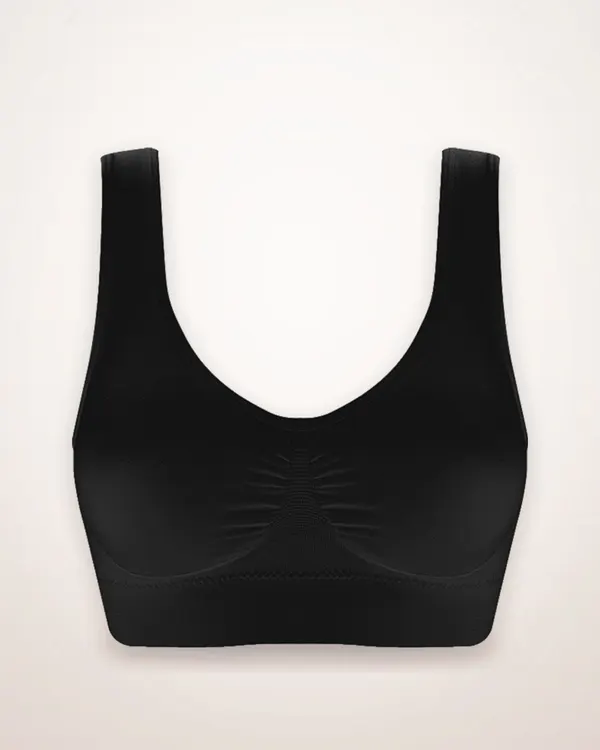
Soft bralettes and pull-on styles roll up small. Keep the ones you sleep in separate from the ones you wear out, so you are not digging through the drawer in the morning.
An adhesive bra goes back on its protective film and into its box, away from dust and direct sun. Dust and lint dull the surface faster than wearing it does.
Small repairs and touch-ups
Look over hooks and eyes every few months. Loose stitching takes two minutes to fix with a needle and strong thread, and a secure hook cannot catch on fabric in the wash.
If a wire starts to press, find where it has worked through the casing, ease it back and darn the small opening closed. A wire that has snapped is a different problem, and the piece is usually better retired.
When a strap slider slips, a few stitches below it hold the length. Once a band stops recovering and sits loose on the tightest hook, the elastic has gone and no repair brings it back.
For a snag in lace, do not cut the loose thread. Pull it through to the back with a fine needle and smooth the loop flat. Removable pads fold over in the wash, so open the pocket while the piece is damp and flatten them before it dries.
Standout pieces
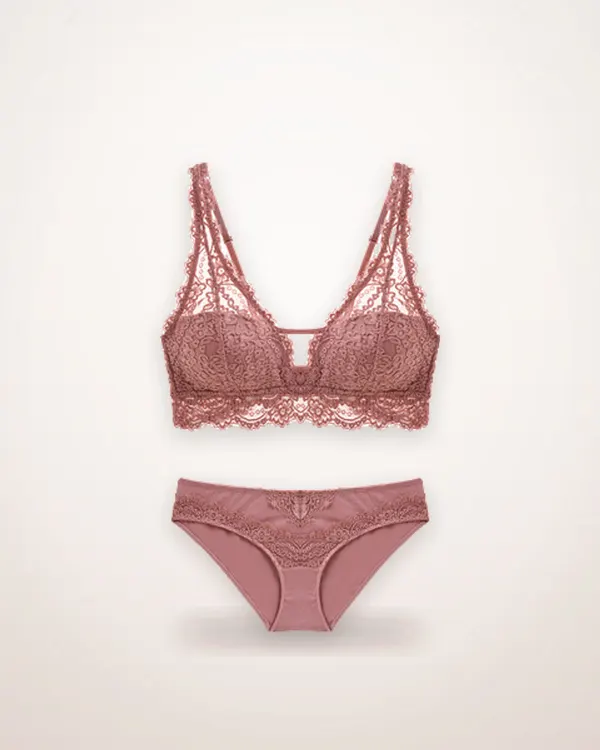
- Wireless Lace Bra Set with Cotton Lining: Gathering at the lace cups shapes without a wire, and the cotton lining where it rests against skin keeps it soft through a long day.
- Front Button Wireless Cotton Bra: The front buttons close in one motion, so there is no band to fasten behind you, and thin 3/4 cups keep the line light under a shirt.
- Embroidered Underwire Bra: Fine embroidery across the cups and a steel-support underwire hold their line, and openwork panels let air move through the acrylic fabric.
- Wireless Full-Cup Support Bra: Nylon jersey cups gather and lift without a wire, with a smoothing back and side panels that sit flat under a shirt.
Questions
How often should I wash a bra?
Two or three wears is a good rhythm for most days, and after one wear if you have been sweating. Give the band a night to recover between wears.
Can I wash bras in a machine?
Yes, on a cool gentle cycle in a mesh bag with the hooks fastened. Lace, moulded cups and underwired pieces last longer washed by hand.
How do I dry a bra without losing its shape?
Press the water out between two towels and lay it flat, shaping the cups with your hands. Skip the tumble dryer and the radiator, and never hang a wet bra by its straps.
How do I keep a silicone adhesive bra holding well?
Put it back on its protective film after each wear and store it in its box away from dust and direct sun. A rinse in cool water with a little mild soap, left to air dry fully, clears the surface when it starts to feel tacky.