


Belts: how to choose
A practical guide to choosing belts by width, material, buckle and placement, with picks from our current collection.
At a glance
- Prices today
- $1.99 to $77.99
- Colours
- black, brown, red, white, camel, coffee, blue, khaki, gold, silver, green, yellow
- Materials
- leather, denim, alloy, knit, pu leather, cowhide, faux leather, linen, canvas
- Details
- stretch, lightweight, adjustable
From the product pages of the pieces in stock now. Prices update with stock and are shown in your currency.
Shop belts
All Accessories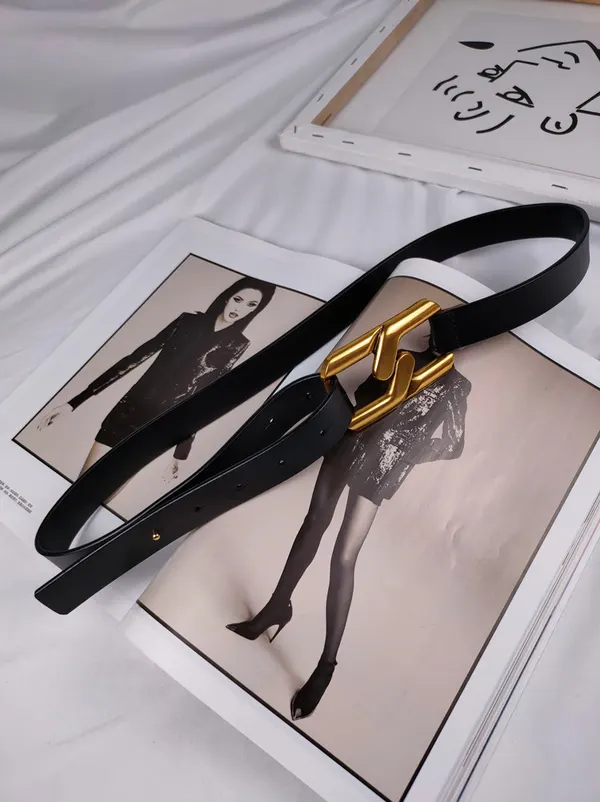
How to choose belts
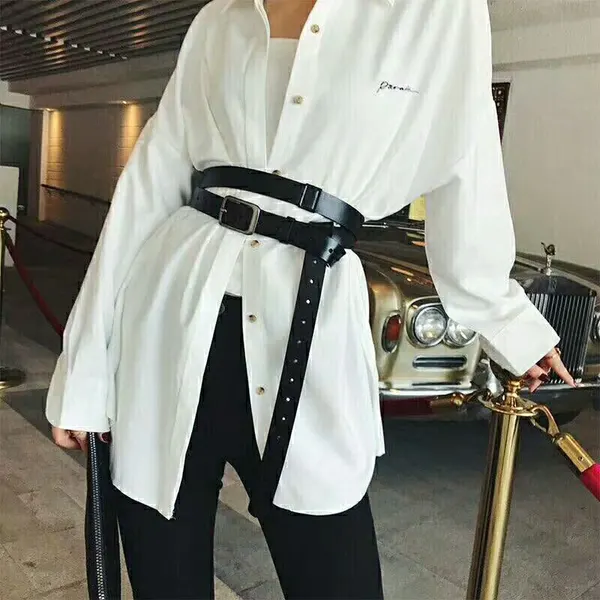
Start with placement. A belt worn at the natural waist draws a dress, shirt or blazer into shape; worn lower, it works with low-slung denim and gives a longer tail. If your trousers or jeans have belt loops, thread the strap through them and fasten over a tucked shirt or fine knit. Over a dress, blouse or tunic, fasten at the waist so the buckle sits flat and the fabric falls cleanly beneath it.
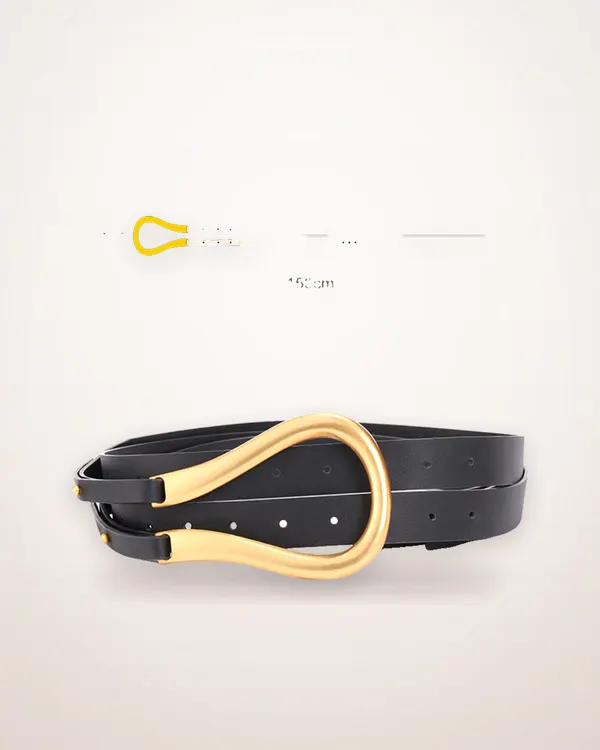
Then consider width. A narrow belt under 2 cm keeps the waist light and suits fine knitwear, shirts and soft dresses; a 2.8 cm strap holds a defined shape; a 3.7 cm belt reads substantial on tailoring. A broad strap can give structure to a simple dress or blazer, while a slim style is easier to layer over print or texture. The right width should feel balanced with the scale of your outfit, not compete with it.
Look at the fastening and colour next. Needle, pin, D-ring, button, square and oval buckles each set a different tone, and an adjustable pin or button fastening lets you choose where the belt sits. Elastic styles move with you through the day. Black, camel and khaki stay grounded; red, green, blue or white can act as a deliberate accent. Consider the metal you wear most: gold-toned copper, bronze-tone and polished alloy all appear across the collection.
Materials, details and fit
Cowhide is the backbone of many belts here. Two layers give a strap a firm hand and a clean edge; a smooth matte-satin surface curves with the body, while a glossy finish catches light. Embossed cowhide carries a grain that shows along a narrow width, and painted cowhide has a smooth, low-sheen surface. Suede leather has a quiet nap and a pliable feel, so it follows the waist rather than sitting stiffly.
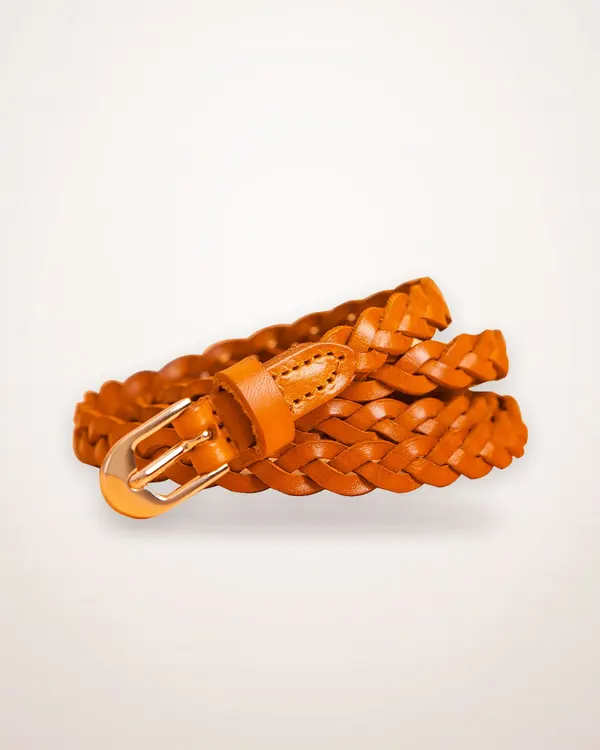
Other materials change the character. Imitation leather gives a supple band and a soft sheen; elastic gathers fabric at the waist and keeps its line through sitting, walking and reaching. Hardware matters too: a flat alloy buckle keeps a tucked shirt clean, a D-shaped alloy pin buckle fastens a woven leather strip, and a single loop or double keeper loops keep the tail neat. A 5 cm oval buckle sits flat against the body; a double buckle fastens securely so the length can sit where you choose.
Fit comes down to the point where the belt will sit. Our product notes suggest choosing 95 cm for a close fit at the natural waist and 105 cm where you prefer a longer tail or a lower placement. Check that the strap lies flat and the buckle does not press into you; adjustable fastenings make small changes easy. A slim belt threads through narrow loops, while a wide strap needs room in the loops or should be worn over fabric.
How to style them
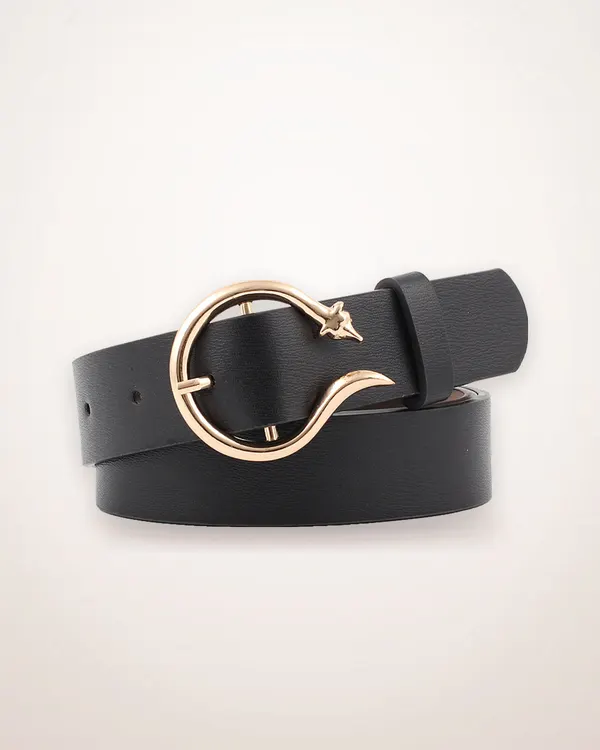
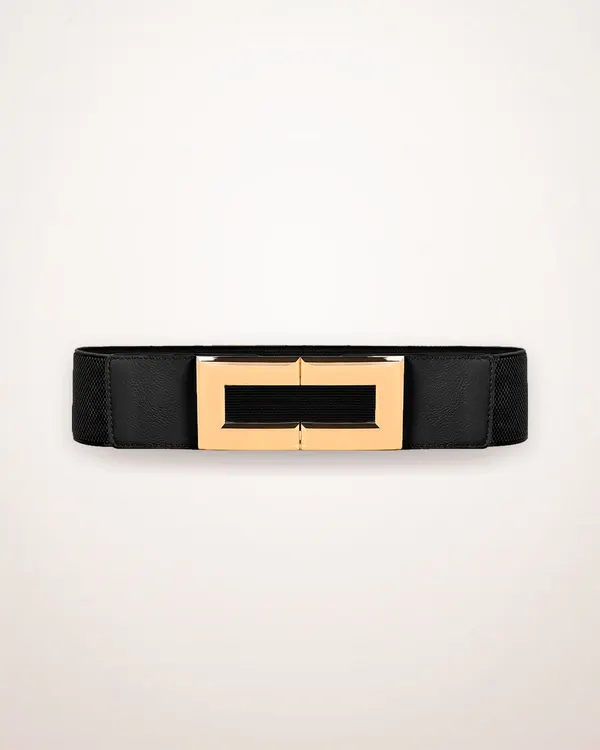
Over dresses and knitwear, let the belt do one job: define the waist. A slim glossy black leather belt gives a polished line to a dress, shirt or tailoring; a wide leather pin buckle belt cinches a dress, blouse or tunic with a clean finish. Soft suede leather brings soft definition to a midi dress or long knitwear, and a slim elastic waist belt slips over a long shirt, knit dress or open blazer without stiffness.
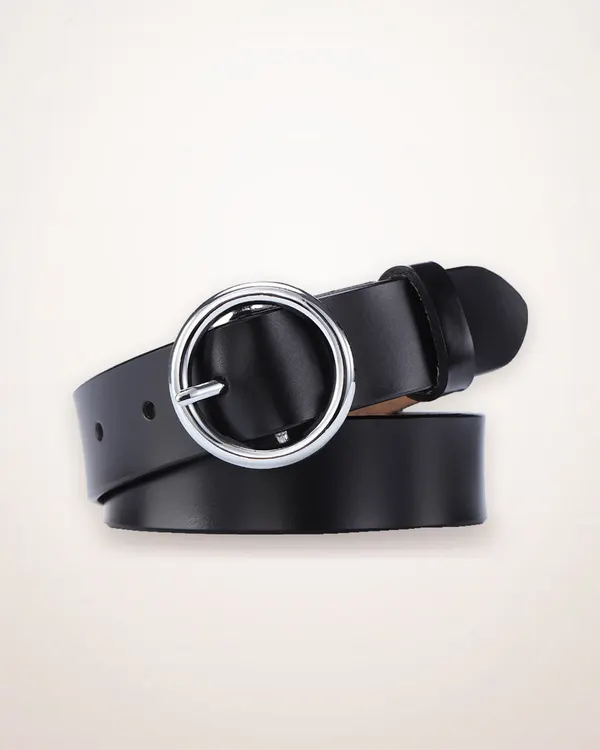
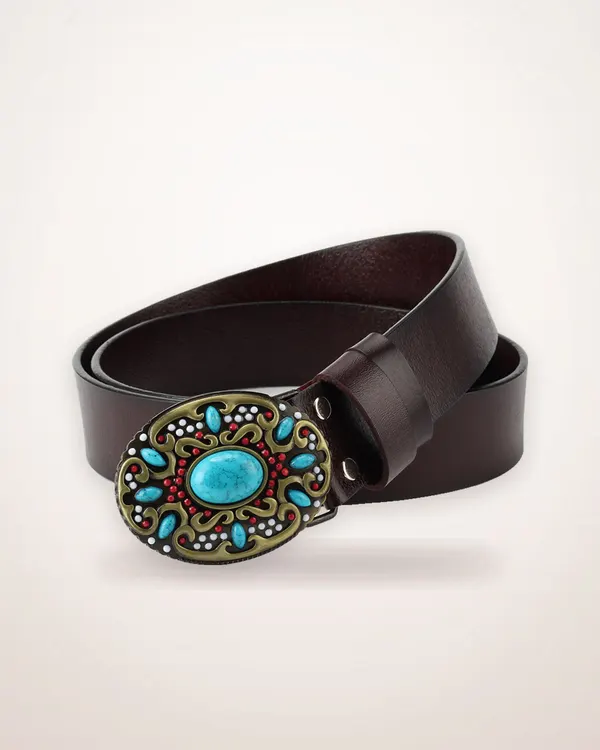
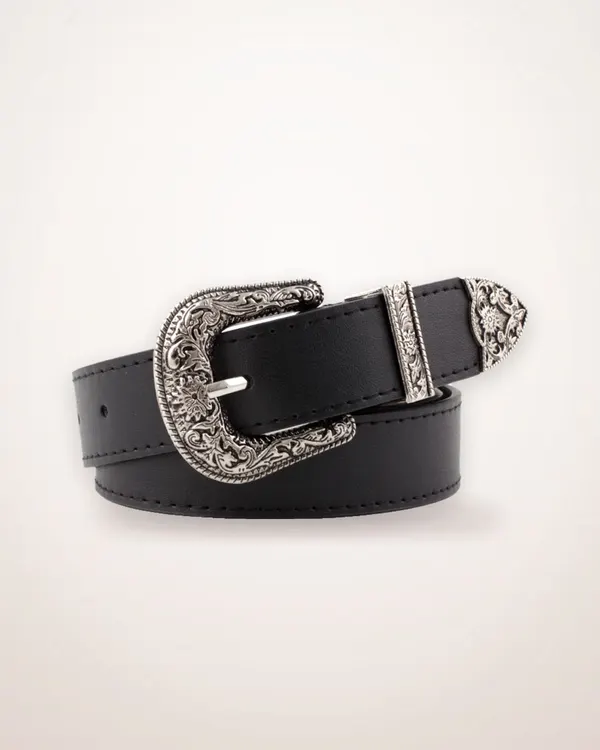
With tailoring and denim, match the belt to the line you want. Smooth cowhide sits neatly at the waist of tailored trousers or at the hip with low-slung denim; a round buckle works with high-waisted trousers for a defined line. A slim cowhide belt with a rivet buckle threads through denim loops or draws in a dress without bulk, while a retro oval buckle belt gives Saturday denim a cleaner line.
Use colour and hardware to set the mood. Black is sharp and grounding; camel, coffee and khaki are quiet; red, orange, purple, blue, green or white can lift a simple outfit. A gold-toned copper oval buckle or a square bronze-tone buckle adds warmth, while a glossy square buckle or polished alloy keeps things clean. If you wear a necklace or earrings in a similar metal, repeat it at the waist; if not, let the buckle be the only shine.
Care and storage
Care for leather with a little routine. Wipe smooth leather and cowhide with a soft dry cloth after wear, and let any dampness air dry away from direct heat. Store the belt rolled or flat rather than folded sharply, so the strap keeps its curve. For suede leather, brush gently in one direction when dry and keep it away from prolonged damp; a soft cloth is safer than a wet wipe.
Elastic and imitation leather need less fuss. Wipe elastic with a barely damp cloth and let it air dry flat, without twisting or stretching it over a hanger. Imitation leather can be wiped with a soft damp cloth and dried away from heat. Keep buckles from pressing into the strap in storage, and fasten the belt loosely so the hardware does not scratch the surface.
Store belts where you can see them. Roll slim styles inside a drawer divider, hang wider belts from a smooth hook, or lay them flat in a box. Keep them away from direct sun and damp, and give metal buckles a quick wipe after wear. Rotating your belts also gives each strap a rest and keeps the shape true.
Standout pieces
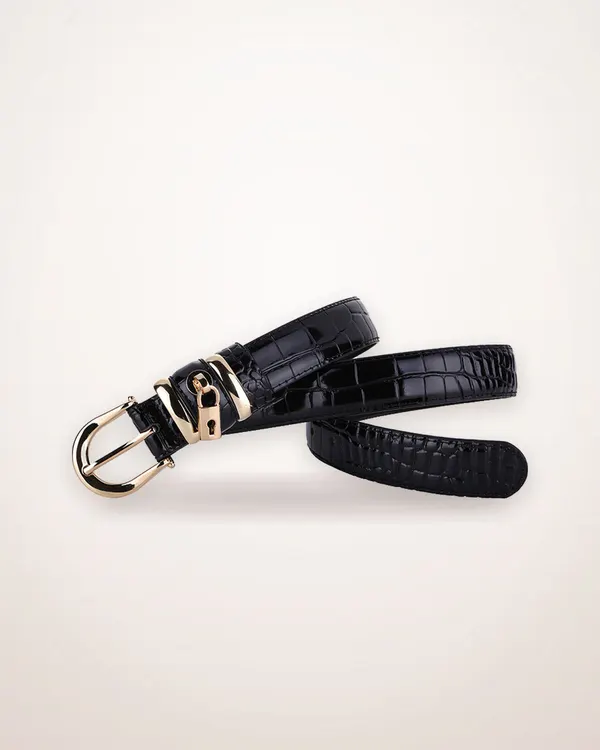
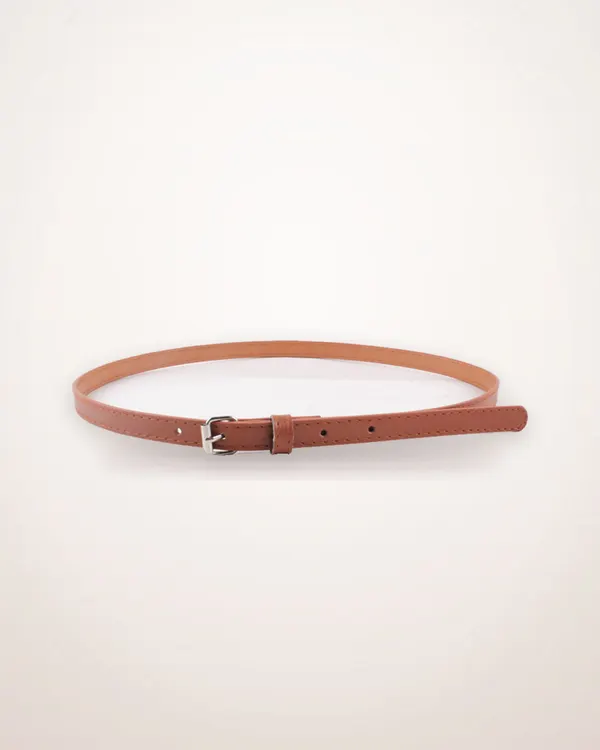
- Slim Glossy Black Belt: A narrow black leather belt with a glossy surface and needle buckle, it gives a clean line at the waist over a dress, shirt or tailored trousers.
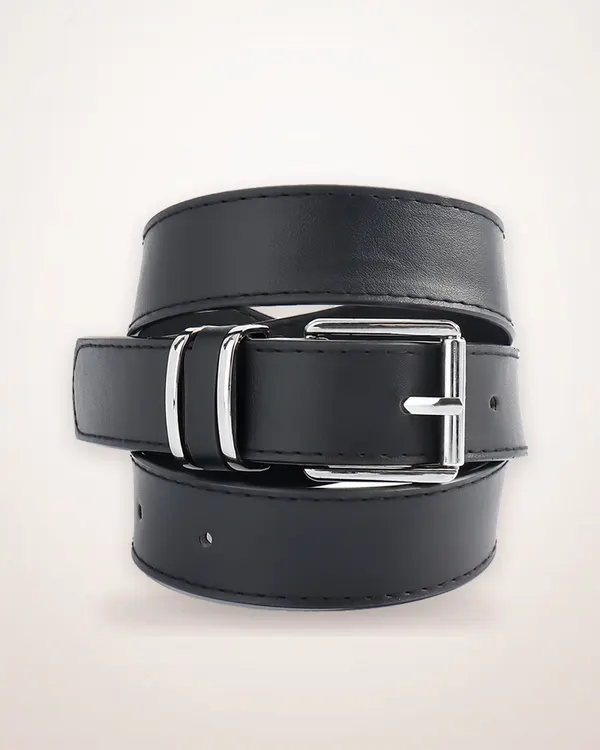
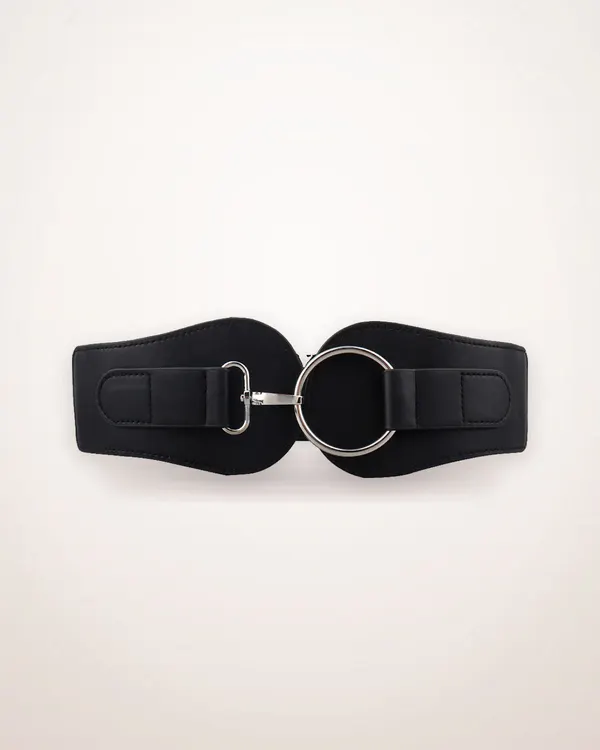
- Wide Leather Pin Buckle Belt: A broad cowhide strap with a pin buckle, this belt brings structure to a dress, blouse or tunic and comes in black, red, green or white.
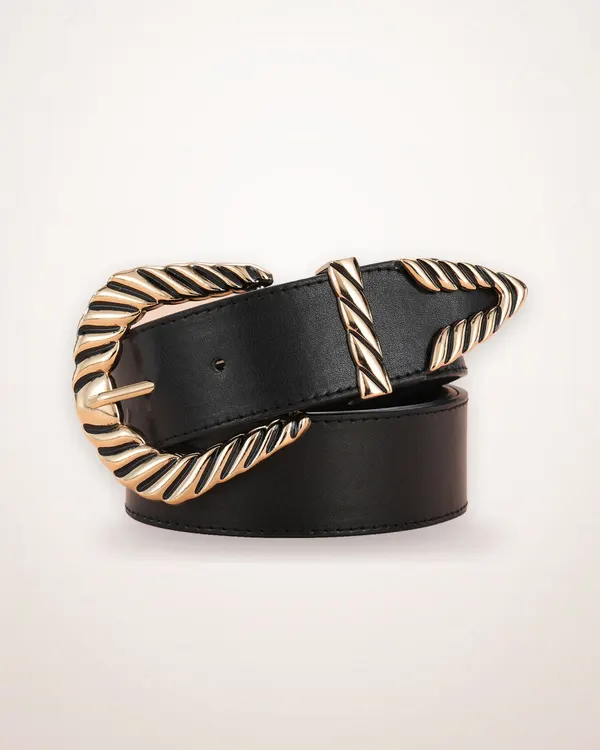
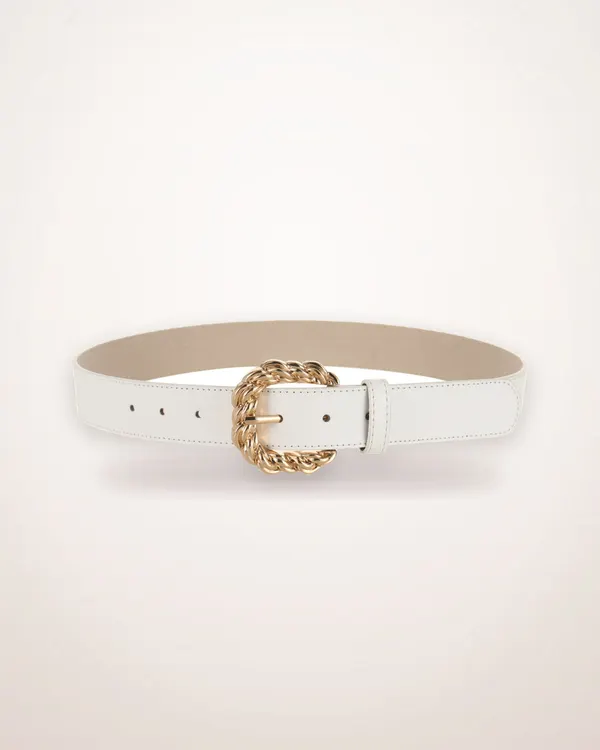
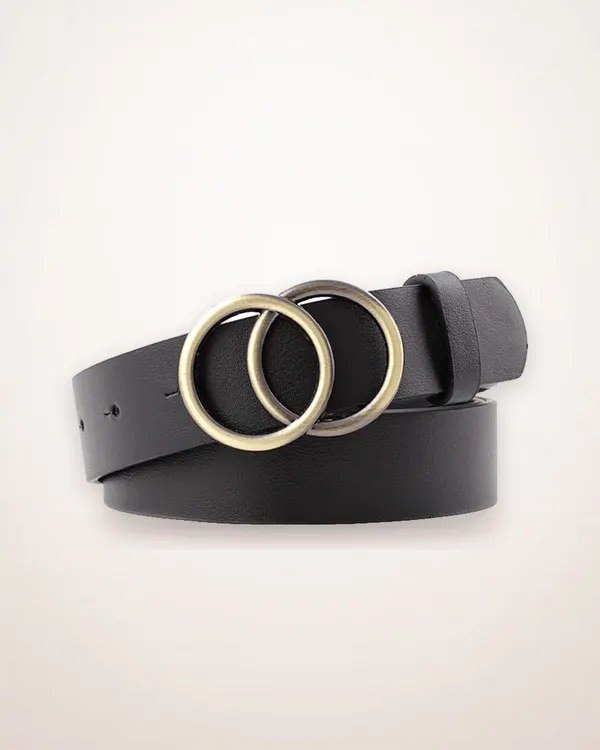
- Retro Oval Buckle Leather Belt: An oval gold-toned copper buckle and smooth painted cowhide give this belt a retro finish for midi dresses and denim.
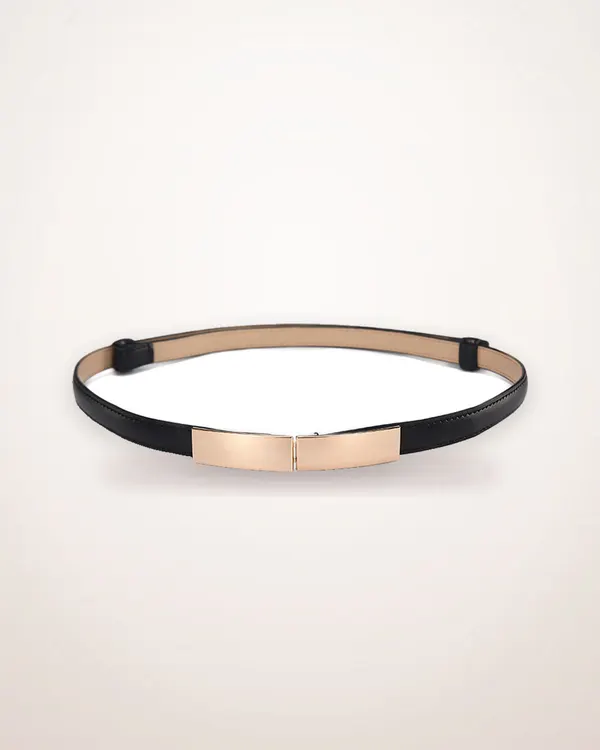
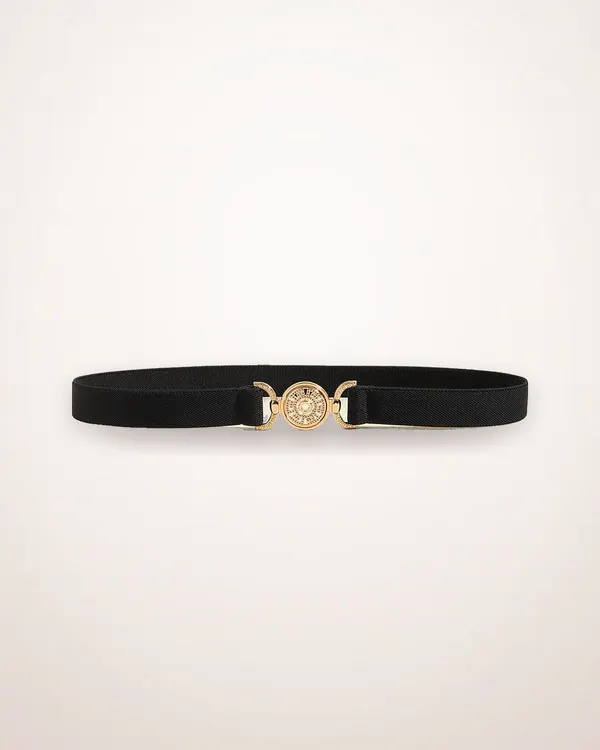
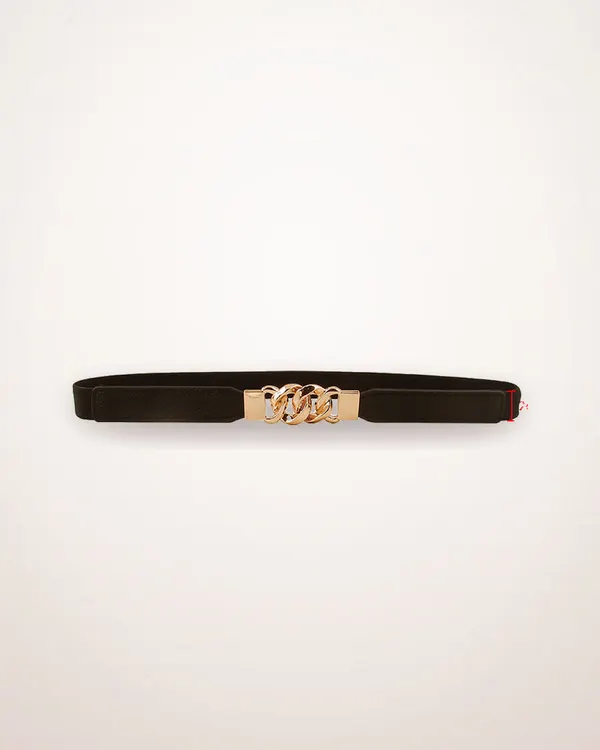
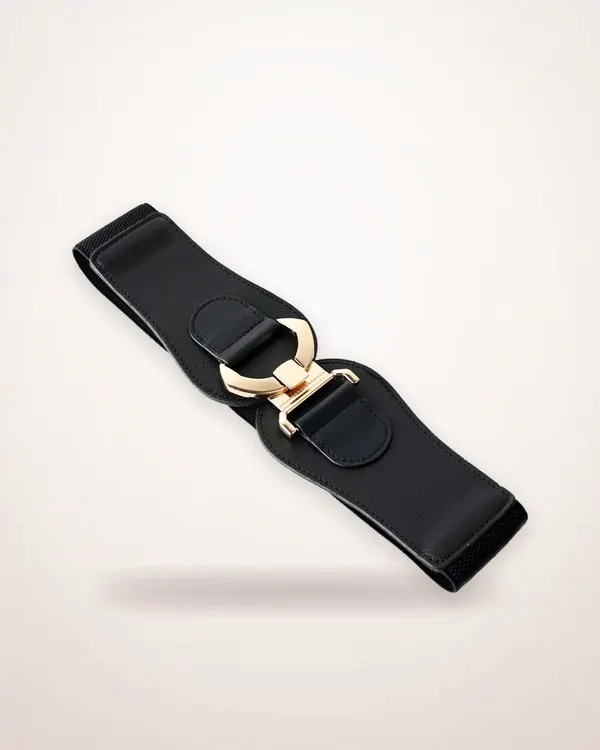
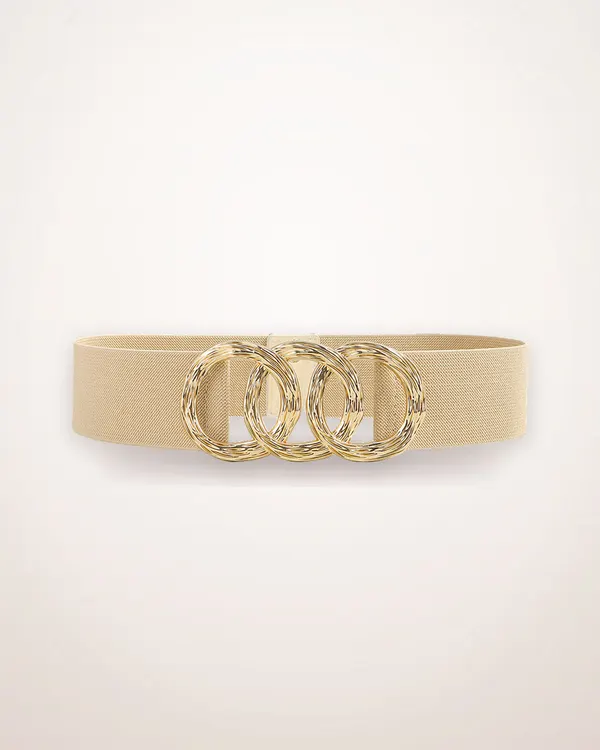
- Slim Elastic Waist Belt with Alloy Buckle: A narrow elastic band with a polished alloy buckle and retaining rings, it marks the waist over a long shirt, knit dress or open blazer and moves with you.
More belts
Questions
How do I choose a belt width?
A narrow belt under 2 cm keeps a light line over dresses, shirts and fine knit; a 2.8 cm strap holds a defined shape and a 3.7 cm belt reads substantial on tailoring. For a defined waist over a dress or blazer, choose a broad style; for denim loops, a slim or medium width sits neatly.
Where should a belt sit at the waist?
Fasten it at the natural waist to define a dress, shirt or blazer, or position it lower with low-slung denim for a longer line. Our product notes also allow for a longer tail or a lower placement when you prefer that look.
How do I find my belt size?
Our product notes suggest choosing 95 cm for a close fit at the natural waist and 105 cm where you prefer a longer tail or a lower placement. Measure the point where you plan to wear the belt and allow for the fabric beneath it.
How should I care for a leather belt?
Wipe smooth leather and cowhide with a soft dry cloth, let it air dry away from direct heat, and store it rolled or flat rather than folded. Keep buckles from pressing into the strap and give metal hardware a quick wipe after wear.
More accessories buying guides
This guide is written with the help of AI from the details on our own product pages and checked automatically before it is published. Product facts come only from those pages. All buying guides · Gift guides · Beauty Journal